

Xeomin Botox: The Naked Toxin, and Who It Is Actually Worth Paying For


Table of Contents
Written & Medically Reviewed by

- Medical Doctor, Chulalongkorn University — Second Class Honors
- Dermatology (International Program) 2024–2025, Chulabhorn International College of Medicine
- 3 Years Experience in Aesthetic Medicine
Xeomin is the only botulinum toxin on the Thai market that contains no complexing proteins — just the 150 kDa neurotoxin and nothing else.
That single manufacturing difference is why Xeomin costs roughly twice what a Korean toxin costs at most Bangkok clinics. Whether that premium is worth paying depends almost entirely on how often you plan to be treated.
This guide covers what Xeomin is, what the FDA data actually shows, how it compares with Nabota, and — honestly — who should skip it.
Key Takeaways
Xeomin (incobotulinumtoxinA) is a German botulinum toxin from Merz, purified so that only the active 150 kDa molecule remains. In FDA glabellar trials, none of 464 treated patients developed neutralising antibodies. At Edition Clinic, 50 units cost 8,900 THB and 100 units cost 15,900 THB.
What Is Xeomin and Who Makes It?
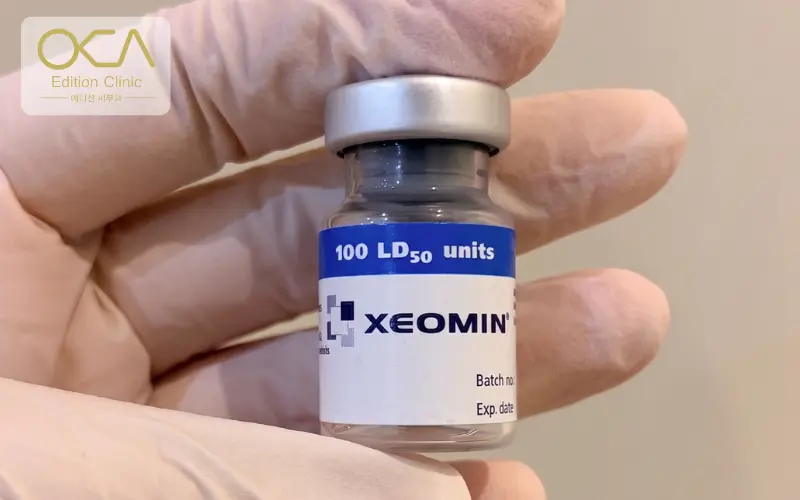
Xeomin is a prescription botulinum toxin type A injection manufactured by Merz Pharmaceuticals in Frankfurt, Germany. Its generic name is incobotulinumtoxinA. Unlike every other toxin stocked in Bangkok, it is supplied as the purified neurotoxin alone, with the bacterial complexing proteins stripped out during manufacturing.
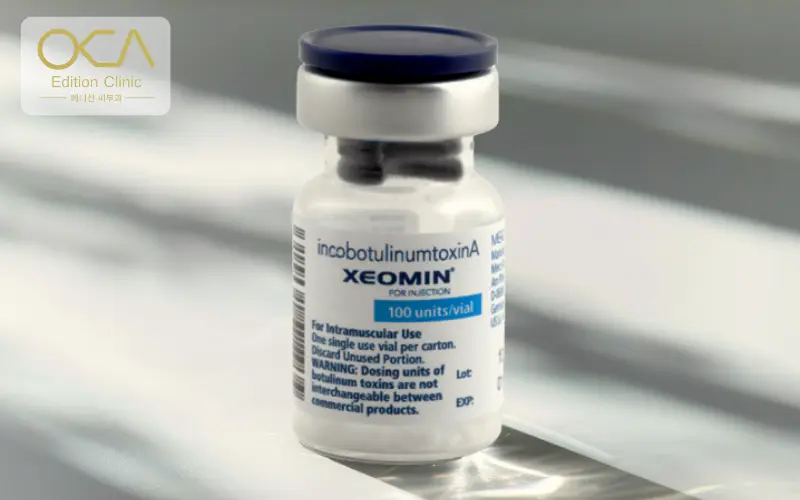
Image: Xeomin (incobotulinumtoxinA) by Merz Aesthetics
The Merz Manufacturing Background
Merz Pharma is a family-owned German company founded in 1908. Xeomin has been distributed in more than 70 countries for therapeutic indications including cervical dystonia and blepharospasm.
The aesthetic side of the business operates as Merz Aesthetics, which also produces Belotero and Radiesse — both of which we use at Edition Clinic.
The Same Product Under Different Names
Xeomin is the trade name used in the United States, Thailand and most of Asia. In parts of Europe the identical aesthetic formulation is sold as Bocouture, and in Japan it is distributed by Teijin Pharma.
If you have been treated abroad under one of those names, you have already had Xeomin.
Vial Sizes and What We Stock
Xeomin is supplied in 50, 100 and 200 unit single-dose vials of lyophilised powder, reconstituted with preservative-free 0.9% sodium chloride before injection. Edition Clinic stocks the 50 and 100 unit vials, which cover essentially all aesthetic dosing.
The 200 unit vial is used mainly for therapeutic neurology cases, not cosmetic treatment.
How Xeomin Works: The Naked Toxin Difference
Xeomin blocks acetylcholine release at the neuromuscular junction, which temporarily relaxes the muscle that creates a dynamic wrinkle. That mechanism is identical across every botulinum toxin type A product. What differs is everything else that comes in the vial alongside the active molecule.
What Complexing Proteins Actually Are
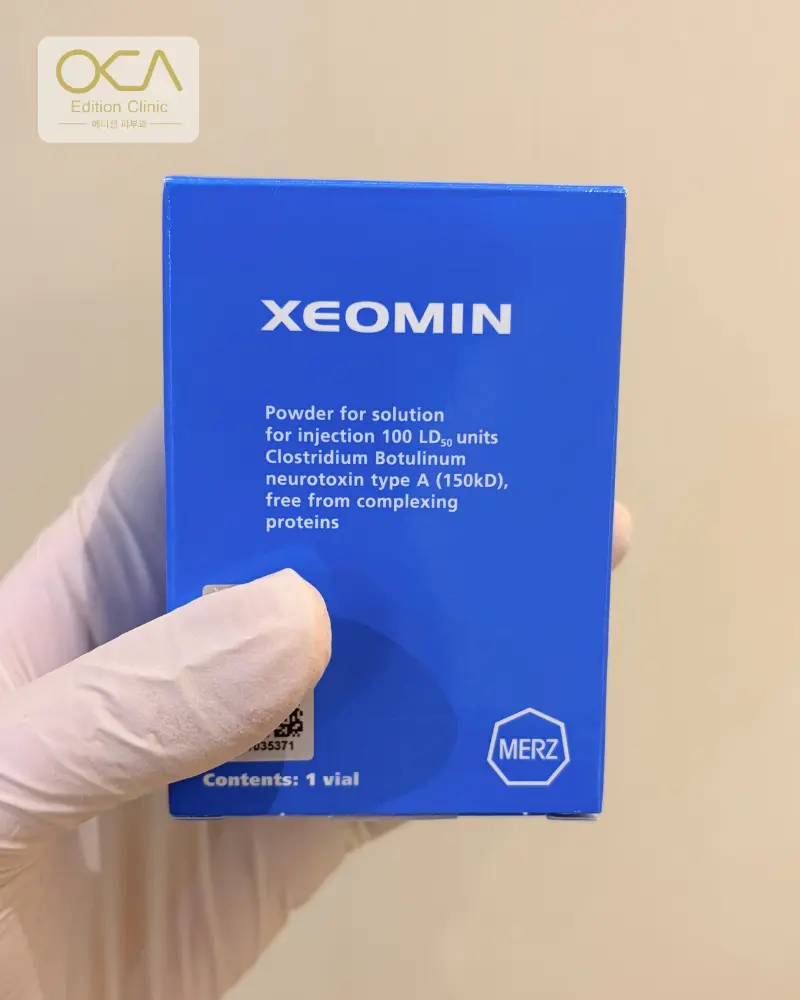
In nature, botulinum toxin type A exists as a large complex: a 150 kDa neurotoxin core wrapped in accessory bacterial proteins that protect it in the gut. Those proteins have no therapeutic function once the drug is injected into a muscle.
Conventional formulations such as onabotulinumtoxinA and prabotulinumtoxinA retain that surrounding protein shell.
What XTRACT Removes
Merz uses a proprietary purification process, marketed as XTRACT Technology, to separate the active neurotoxin from the complexing proteins and other clostridial residues. What remains is the 150 kDa core plus two excipients: human serum albumin and sucrose.
The result is often described in clinics as "naked" toxin. It is a marketing term, but an accurate one.
Why the Core Is the Only Part That Matters
According to a 2024 peer-reviewed review in Toxins, the 150 kDa core is the only component necessary and sufficient to produce the muscle-relaxing effect. Everything else is manufacturing residue that the immune system may or may not notice.
That review also notes that the rate of antibody-mediated secondary non-response is reported lowest in complexing protein-free formulations. You can read it at PubMed Central.
What This Does Not Change
Purity does not make Xeomin stronger, faster or longer-lasting. Unit for unit, its clinical effect is comparable to other type A toxins for the same indication. The difference is immunological, not cosmetic, and it only accumulates over years of repeated treatment.
Is Xeomin FDA Approved?
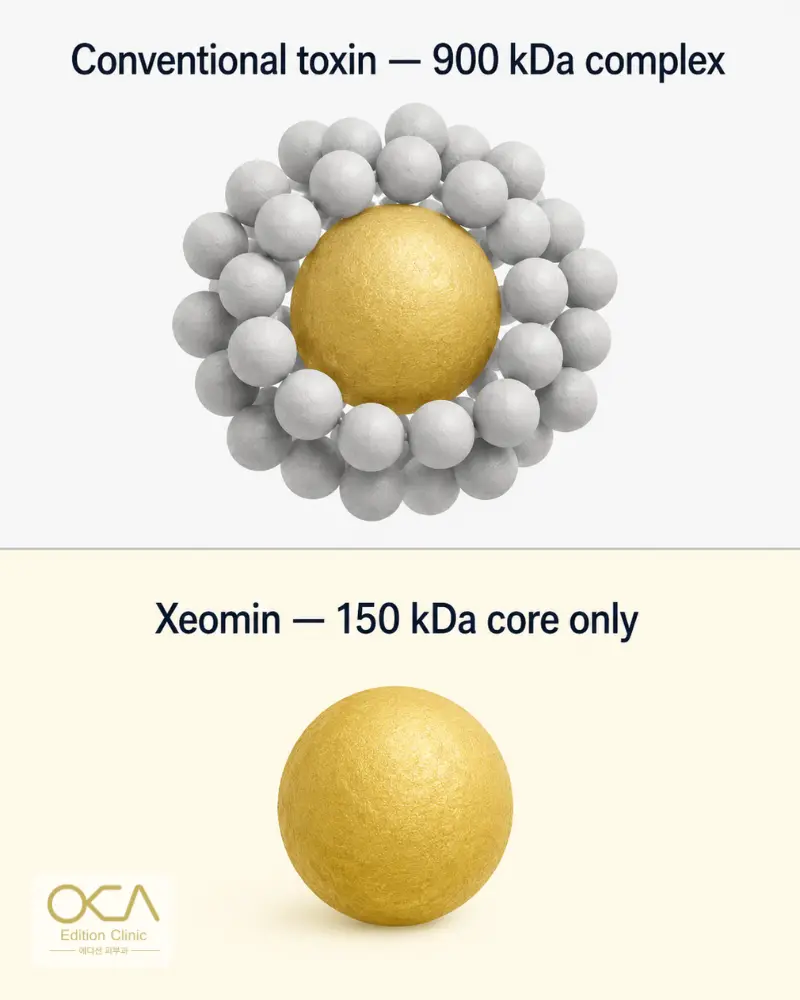
Yes. Xeomin received its initial US FDA approval in 2010 for therapeutic use, followed in 2011 by approval for the temporary improvement of moderate to severe glabellar frown lines. It is also registered with the Thai FDA, which is what governs its legal use in Bangkok.
The 2024 Upper Facial Lines Expansion
In July 2024 the FDA expanded the aesthetic indication to cover glabellar lines, horizontal forehead lines and crow's feet in a single treatment session. Xeomin was the first neurotoxin approved for simultaneous treatment of all three upper facial areas.
That approval was supported by two phase 3 placebo-controlled studies enrolling 730 adults.
What the Original Glabellar Trials Showed
According to the FDA prescribing information, three placebo-controlled glabellar trials enrolled 803 subjects, of whom 535 received a single 20 unit dose. Subjects ranged from 24 to 74 years old and were 88% female.
Median onset of effect was within seven days of injection.
What FDA Approval Does Not Cover
Jawline slimming through masseter injection is not an FDA-approved indication for any botulinum toxin brand, including Xeomin. It is a well-established off-label use with published clinical support, but it sits outside the label.
We explain the dosing logic in our guide to masseter botox for jawline slimming.
Dr. Mild on reading approval claims: "Patients often assume FDA approval means a brand is better. It means a company paid for trials in a specific indication. When someone asks me why one toxin is approved for the forehead and another is not, the honest answer is usually commercial, not clinical."
Xeomin vs Nabota: Which Fits Your Treatment Pattern?
The practical choice at Edition Clinic is between Xeomin at 8,900 THB for 50 units and Nabota at 4,900 THB for the same quantity. Nabota is a 900 kDa complexing protein-containing Korean toxin with fast onset; Xeomin is the complexing protein-free German option built for long-term use.
Where the Price Difference Comes From
The gap is not a markup on reputation. Complexing protein-free manufacturing requires an additional purification stage, and German production costs sit well above Korean production costs.
Import duty and Thai FDA registration for European pharmaceuticals add further cost before the vial reaches any Bangkok clinic.
| Feature | Nabota | Xeomin |
|---|---|---|
| Complexing proteins | Present | None |
| Injected molecule | 900 kDa complex | 150 kDa core only |
| Manufacturer | Daewoong, South Korea | Merz, Germany |
| Antibody risk profile | Standard for type A toxins | Lowest reported in review data |
| Best suited to | Occasional or first-time patients | Year-round maintenance patients |
| Price at Edition Clinic (50U) | 4,900 THB | 8,900 THB |
| Price at Edition Clinic (100U) | 8,990 THB | 15,900 THB |
Where Allergan Botox Sits
Allergan Botox is the third option we stock, at 13,000 THB for 50 units and 20,000 THB for 100 units. It is a complexing protein-containing 900 kDa formulation like Nabota, with the longest clinical track record of any toxin worldwide.
It is not in the table above because it does not sit at either end of the comparison that matters here — it is neither the value option nor the purity option.
Patients who want the full brand-by-brand breakdown can read our detailed look at Nabota and how Korean toxins compare, or the pricing on our Botox in Bangkok treatment page.
Not Sure Which Toxin Suits Your Treatment Pattern?
Bring your treatment history to a free consultation. Dr. Mild will tell you honestly if a cheaper option makes more sense for how often you actually get treated.
💬 Get a Free Consultation800+ reviews across Google & GoWabi · 6,700+ Patients Treated
Antibody Resistance and Why It Matters for Long-Term Users
Repeated injection of any botulinum toxin can prompt the immune system to produce neutralising antibodies. When those antibodies reach a high enough level, treatments stop working — a phenomenon called antibody-mediated secondary non-response. This is the single clinical argument for choosing Xeomin.
What Secondary Non-Response Looks Like
It rarely arrives suddenly. Patients typically report that results feel weaker, wear off sooner, or need more units to reach the same effect.
What the Xeomin Trial Data Shows
The FDA prescribing information reports that among 464 patients treated with Xeomin across the main phase and open-label extension of the GL-1 and GL-2 glabellar trials, no patients developed neutralising antibodies after treatment, and none showed secondary loss of response.
What the Independent Literature Adds
A cross-sectional study published in the Journal of Neural Transmission examined 59 patients treated exclusively with incobotulinumtoxinA and 32 patients switched to it from other preparations.
The full paper is indexed on PubMed.
The Limits of This Evidence — Read This Part
Most antibody research comes from neurology, where doses of 200 to 500 units every three months are routine. Aesthetic patients typically receive 20 to 100 units two or three times a year — a fraction of that antigen exposure, and a much lower baseline risk to begin with.
In other words, the strongest evidence for Xeomin's advantage was generated in patients who are nothing like the average cosmetic patient.
Dr. Mild on suspected resistance: "When a patient tells me their toxin stopped working, antibodies are the last thing I check, not the first. I look at units used, the interval between sessions, and whether the injection points matched their muscle pattern. Most of the time one of those three explains it."
Results may vary between patients, and no formulation can guarantee that resistance will never develop. All botulinum toxin treatments at Edition Clinic are performed by licensed medical professionals who document units and injection sites at every visit, so that a genuine change in response can actually be traced.
Which Areas Xeomin Treats, and How Many Units
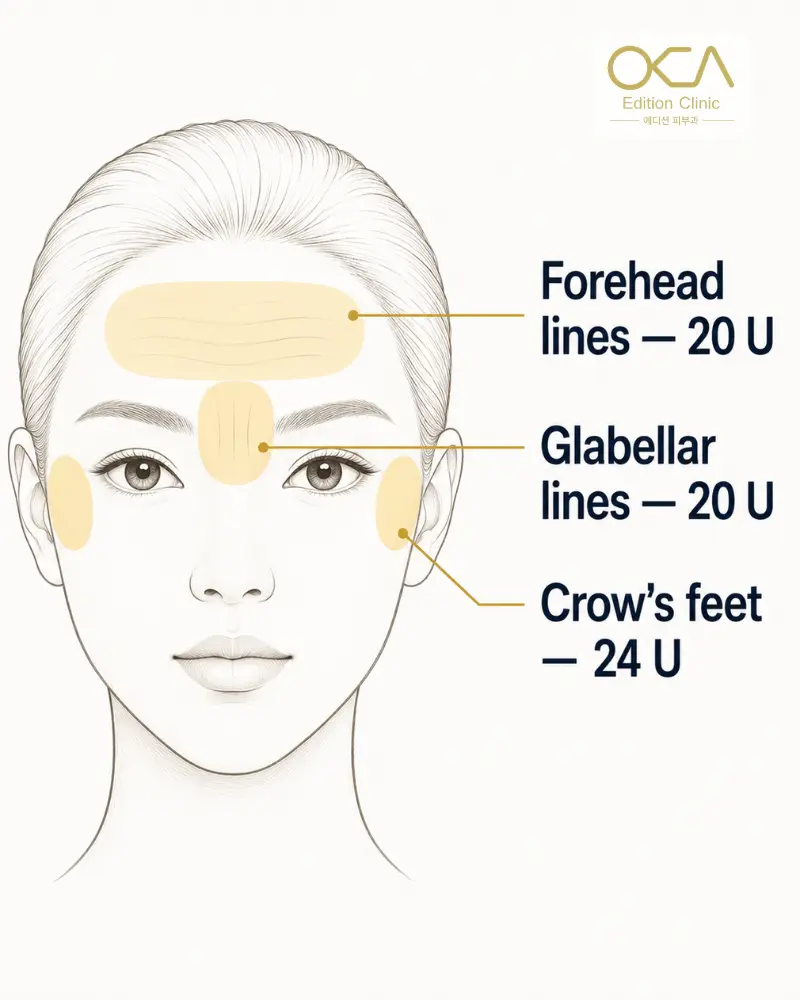
Xeomin is FDA-approved for three upper facial areas and widely used off-label for the lower face. The label dose is 20 units for glabellar lines, 20 units for horizontal forehead lines and 24 units for crow's feet — a total of 64 units for full upper face treatment.
Glabellar Lines — 20 Units
The label specifies 20 units divided into five equal intramuscular injections of 4 units each: two into each corrugator muscle and one into the procerus.
This is the original 2011 approval and the most heavily studied use of the product.
Forehead Lines — 20 Units
Horizontal forehead lines were added to the label in 2024. Dosing here is conservative by necessity, because over-treating the frontalis muscle is the most common cause of a heavy or dropped brow.
Crow's Feet — 24 Units
Lateral canthal lines are treated with 12 units per side. The orbicularis oculi is a thin, superficial muscle, so injection depth matters more here than raw dose.
Masseter and Lower Face — Off-Label
Jawline slimming is the most requested treatment we see, and it is off-label for every toxin brand. Doses are substantially higher than upper face doses because the masseter is a thick, powerful muscle.
Our masseter botox guide covers unit ranges and realistic timelines in detail.
The Session Ceiling
The FDA label sets a maximum cumulative dose of 400 units in a single treatment session across all indications. Aesthetic treatment sits far below that ceiling, but the number matters when combining facial and body areas.
In our experience at Edition Clinic, the demand pattern differs sharply from the label. Patients ask about Xeomin for the jawline and the forehead — one off-label, one only recently approved.
Xeomin Results Timeline: Onset, Peak and Duration
According to the FDA prescribing information, the median first onset of Xeomin effect occurs within seven days of injection, and the typical duration of effect is up to three months. Individual patients may see effects last significantly longer or shorter than that.
Days 1 to 3 — Early Softening
Some patients notice reduced movement within 48 to 72 hours. This is normal but not universal, and its absence does not predict a poor result.
Days 7 to 14 — Peak Effect
The full result is usually visible around day fourteen. This is the correct point to assess whether the dose was right — not day three, when patients most often panic.
Any touch-up decision should be made at this review, not before.
Months 3 to 4 — Gradual Return
Muscle activity returns gradually rather than switching back on. Most aesthetic patients book their next session somewhere between the three and four month mark.
Retreatment Interval
The FDA label states that retreatment should be administered no more frequently than every three months. Shortening that interval is one of the few patient behaviours plausibly linked to increased antibody risk, which makes it worth respecting.
Results may vary depending on muscle strength, metabolism, dose and treatment history.
Been Treated Before and Noticed It Fading Faster?
Bring your previous unit counts and treatment dates. We will look at the record before assuming the product is the problem.
💬 Ask Dr. Mild a Question800+ reviews across Google & GoWabi · 6,700+ Patients Treated
Xeomin Safety Profile and Side Effects
In the three placebo-controlled glabellar trials covering 803 subjects, the most frequent adverse reactions reported in Xeomin-treated patients were headache at 5.4%, facial paresis at 0.7%, injection site haematoma at 0.6% and eyelid oedema at 0.4%. Four serious adverse events occurred, all in placebo-treated subjects.
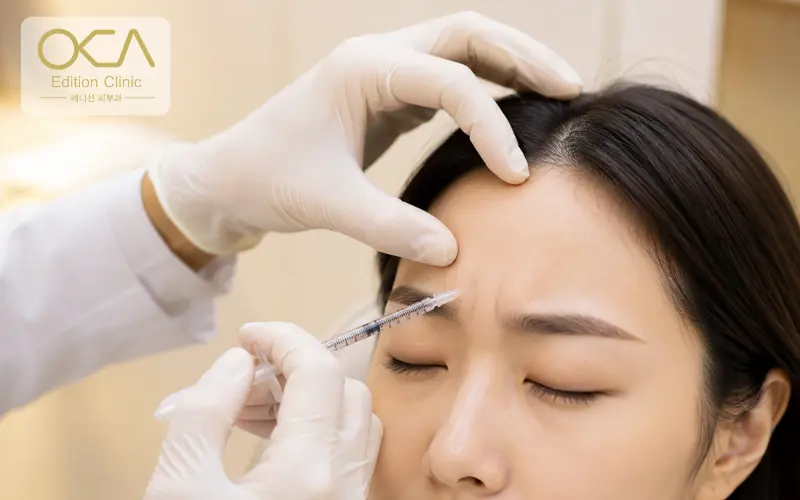
Common and Self-Limiting
Small bruises, brief redness and a mild headache in the first day or two are the reactions we see most often. They resolve without treatment.
Less Common but Clinically Relevant
Eyelid ptosis and brow heaviness are technique-dependent complications rather than product defects. They are temporary, but they can persist for several weeks, which is why injector experience matters more than brand choice.
The Boxed Warning
All botulinum toxin products carry an FDA boxed warning about distant spread of toxin effect, with symptoms including swallowing and breathing difficulties. These have been reported mainly at high therapeutic doses in children treated for spasticity, not at cosmetic doses.
Who Should Not Receive Xeomin
- Anyone with known hypersensitivity to any botulinum toxin product or formulation component
- Patients with infection at the proposed injection site
- People with neuromuscular disorders such as myasthenia gravis or Lambert-Eaton syndrome
- Anyone who is pregnant or breastfeeding
- Patients under 18, for whom safety in glabellar lines has not been assessed
Potency units are specific to each product and cannot be converted between brands, which is why switching toxins is a clinical decision rather than an arithmetic one.
⚠️ Before You Book Anywhere
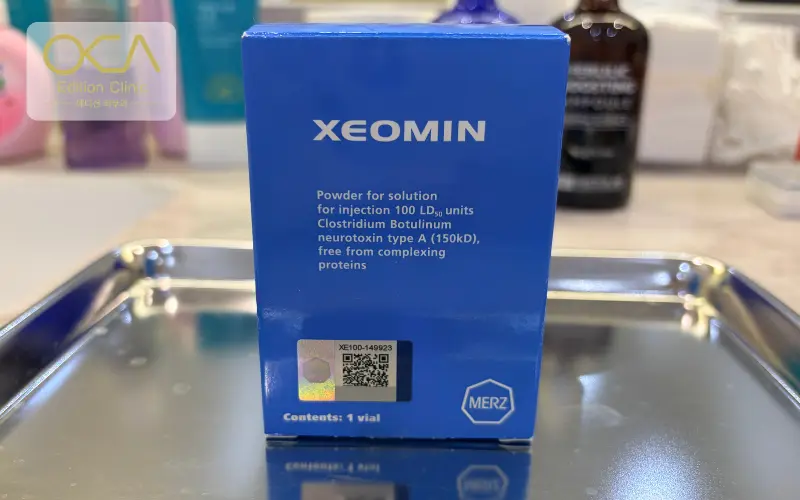
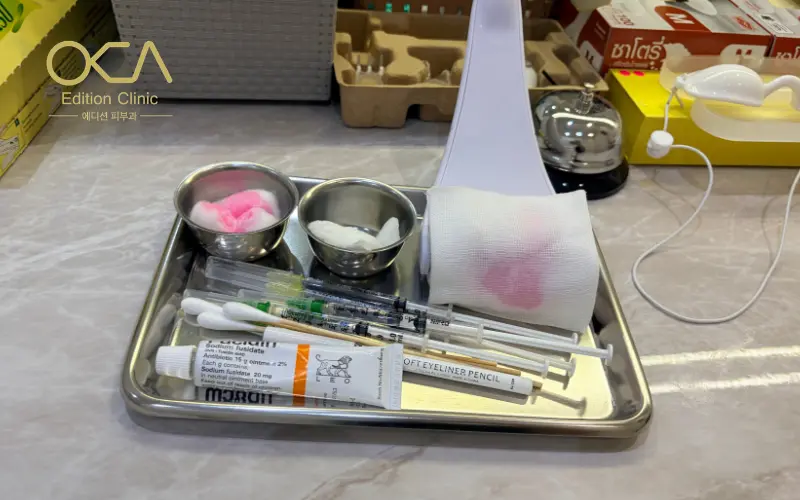
Ask to see the vial before reconstitution and check the Thai FDA registration number on the carton. Any clinic using authentic product will open it in front of you without hesitation.
How Much Does Xeomin Cost in Bangkok?
At Edition Clinic, Xeomin is 8,900 THB for 50 units and 15,900 THB for 100 units, with no separate consultation fee. Pricing is quoted per vial rather than per area, so you know the total before treatment begins rather than after the units are counted.
What Is Included
The quoted price covers the consultation, the product, the injection and the review appointment. There are no add-on charges for numbing cream or for treating multiple areas within the same unit allocation.
Choosing Between 50 and 100 Units
Fifty units covers a single area comfortably — glabellar lines, forehead, or crow's feet on their own. Full upper face treatment at label dose needs 64 units, which means the 100 unit vial.
Masseter treatment for both sides typically consumes most of a 100 unit vial on its own.
Why Brand Is Not the Main Cost Driver
Over a year, the difference between Xeomin and Nabota for one area treated three times is roughly 12,000 THB. The difference between correct and excessive dosing, across the same year, can be larger than that.
For the full range of brands, treatment areas and package options, see our complete Botox in Bangkok pricing page.
💡 A Cheaper Quote Is Not Always a Cheaper Treatment
Some clinics quote per area rather than per vial, then dilute the product further to stretch it. Per-vial pricing removes that ambiguity entirely, because the unit count is fixed before anything is drawn up.
Ready to Book Your Xeomin Treatment?
Authentic Xeomin · 50U 8,900 THB · 100U 15,900 THB · Free consultation · No dilution, no hidden fees.
📅 Book Your Appointment800+ reviews across Google & GoWabi · 6,700+ Patients Treated
Who Should — and Shouldn't — Choose Xeomin
Xeomin makes clinical and financial sense for patients on year-round maintenance, and for anyone who has felt their previous toxin lose effect. For someone treating once or twice a year, the purity advantage is real but largely theoretical, and the extra 4,000 THB buys very little.
Xeomin Is a Good Fit If You
- Are treated three or more times a year and expect to continue for years
- Have noticed results weakening across successive sessions with another brand
- Combine facial and body areas, pushing your annual unit total high
- Started botulinum toxin young and anticipate decades of maintenance
- Have previously been treated at therapeutic doses for a medical indication
A Cheaper Option Is Probably Better If You
- Are booking your first ever treatment and want to see how you respond
- Treat once or twice a year before specific events
- Are trying a new area and are not yet sure you will repeat it
- Would be stretching your budget, and would then delay retreatment because of cost
- Would rather put the difference toward a second treatment area

Dr. Mild on first-time patients: "I do not start new patients on Xeomin unless they ask for it. You cannot know yet how often you will want treatment, and paying a premium for antibody protection you may never need is not a decision I want to make on your behalf."
The Honest Limitation
No botulinum toxin treats static lines — the creases visible when your face is completely at rest. Toxins relax the muscle that deepens a line; they do not restore volume or rebuild collagen in skin that has already lost it.
Patients with established static lines usually need a filler or a collagen-stimulating treatment alongside, and no brand of toxin changes that.
Why Choose Edition Clinic for Xeomin in Bangkok?
Edition Clinic is a Korean-standard aesthetic dermatology clinic that stocks Nabota, Allergan and Xeomin together. Carrying all three is deliberate: it means we can recommend against the expensive option when it is not warranted, which a single-brand clinic structurally cannot do.
What Sets Our Botulinum Toxin Treatment Apart
- Three brands in stock: Nabota, Allergan and Xeomin, so brand advice is not constrained by inventory
- Per-vial pricing: Unit counts are fixed before reconstitution, and we do not dilute to stretch a vial
- Vial opened in front of you: Thai FDA registration on the carton is there to be checked
- Documented dosing history: Units and injection points recorded each visit, so a real change in response is traceable
- Day fourteen review: Assessment at peak effect rather than at the point of anxiety
- Korean-standard technique: Dosing aimed at preserving expression rather than eliminating movement
In our experience, the patients who arrive convinced they have developed resistance have most often been under-dosed or treated at intervals shorter than the label allows. That is why we start with the record rather than with a brand switch.
Consultations take place at our Thonglor clinic, near BTS Thong Lo, and all injections are carried out by licensed medical professionals.
Clinic-wide patient count: 6,717 unique patients treated from 7 August 2023 to 1 October 2026, excluding repeat visits. This is not a treatment-specific count.
Frequently Asked Questions About Xeomin Botox
1. Is Xeomin the same as Botox?
Answer: Both are botulinum toxin type A and both relax muscles the same way, but they are not identical products. Xeomin contains only the 150 kDa neurotoxin, while Allergan Botox is supplied as a 900 kDa complex that retains accessory bacterial proteins.
Their units are not interchangeable and cannot be converted between brands.
2. Does Xeomin work faster than other toxins?
Answer: No. The FDA prescribing information gives a median first onset within seven days, which is comparable to other botulinum toxin type A products. Purity affects immune recognition over years of treatment, not how quickly the muscle relaxes after a single session.
3. Does Xeomin last longer than Nabota?
Answer: There is no reliable evidence that it does. The label describes a typical duration of up to three months for Xeomin, which sits in the same range as other type A toxins. Dose, muscle strength and metabolism influence duration far more than brand.
4. Is Xeomin better if I have been getting botox for years?
Answer: It is the strongest argument for choosing Xeomin. Long-term, frequent treatment is where antibody-mediated secondary non-response becomes clinically relevant, and complexing protein-free formulations report the lowest rates of it in published review data covering the three complexing protein-free formulations currently on the market.
For occasional treatment, the benefit is largely theoretical.
5. Can I switch from Nabota to Xeomin?
Answer: Yes, and many patients do. Because potency units are specific to each product and cannot be converted between brands, your doctor should reassess dosing at consultation rather than copying your previous unit count across, even though the final numbers often end up similar in practice.
6. Does Xeomin actually prevent resistance?
Answer: It lowers the risk rather than removing it. In the FDA glabellar trials, none of 464 treated patients developed neutralising antibodies, but no formulation can guarantee that resistance will never occur, and most supporting research comes from high-dose neurology patients.
7. How much does Xeomin cost at Edition Clinic?
Answer: Fifty units cost 8,900 THB and 100 units cost 15,900 THB, with the consultation included. Pricing is per vial rather than per area, so the unit count is fixed before anything is reconstituted and the total is known in advance.
8. Can Xeomin be used for jawline slimming?
Answer: Yes, though masseter injection is off-label for every botulinum toxin brand, not just Xeomin. Doses are considerably higher than upper face doses because the masseter is a thick muscle, so a full bilateral treatment usually needs most of a 100 unit vial.
9. Why is Xeomin more expensive than Korean toxins?
Answer: Removing the complexing proteins requires an additional purification stage, and German pharmaceutical manufacturing costs considerably more than Korean manufacturing does. Import duty and Thai FDA registration for European products then add further cost before any vial reaches a Bangkok clinic.
10. Will Xeomin make my face look frozen?
Answer: That is a dosing and placement outcome, not a brand characteristic. Any type A toxin will over-relax a muscle if too many units go into the wrong plane, and Korean-standard technique deliberately aims to preserve expression rather than eliminate movement.
11. How soon can I have my next Xeomin session?
Answer: The FDA label states that retreatment should not be given more frequently than every three months. Shortening that interval is one of the few patient-controlled factors plausibly linked to increased antibody formation, so we do not treat earlier without a clinical reason.
12. How do I know the Xeomin is authentic?
Answer: Ask to see the sealed vial and the Merz carton with its Thai FDA registration number before reconstitution begins. Any clinic using genuine product will open it in front of you, and a refusal to do so is the clearest warning sign available to a patient.
Ready to Try Xeomin in Bangkok?
Book a free consultation with Dr. Natcha (Mild) at Edition Clinic.
50U 8,900 THB · 100U 15,900 THB · Vial opened in front of you.