

Is Juvelook a Filler or Skin Booster? What Sets It Apart

Table of Contents
Show / Hide
Medically Reviewed by

- Medical Doctor, Chulalongkorn University — Second Class Honors
- 3 Years Experience in Aesthetic Medicine
- Specialized in Skin Boosters & Regenerative Treatments
No—Juvelook is a hybrid skin booster and collagen biostimulator, rather than a conventional dermal filler.
Juvelook Classic and Juvelook Volume also need to be distinguished. Classic is discussed mainly in relation to skin quality, while Volume, also known as Lenisna, uses larger particles for deeper, gradual volume restoration. That does not make the collagen response an immediate structural gel. Where both skin quality and a deeper hollow need attention, Juvelook and an HA filler can have separate roles within an assessed treatment plan.
Key Takeaways
- Its two components have different roles: non-crosslinked hyaluronic acid (HA) provides early hydration, while PDLLA encourages the skin to make new collagen.
- Juvelook targets overall skin quality, including pores, fine lines, acne scars and crepey under-eye skin. Traditional HA fillers supply immediate volume and contour by placing a gel beneath the skin.
- Juvelook’s visible changes accumulate over roughly four to eight weeks and can continue developing over the following months.
- After a course of treatments, results commonly last around 12–18 months.
- Juvelook Volume is a different formulation that can restore softer volume gradually; its effect still depends on collagen formation rather than a static filling gel.
Is Juvelook a Filler?
No—Juvelook is a hybrid skin booster and biostimulator, rather than a conventional dermal filler that supplies immediate structural volume. Its main role is to improve skin quality through hydration and collagen formation.

Juvelook combines PDLLA microparticles with non-crosslinked HA. The HA supplies early moisture and gentle plumping, while PDLLA prompts fibroblasts to produce new collagen. A conventional HA filler instead uses crosslinked HA to form a gel that occupies space and holds a contour. This difference explains why the two injectables are classified differently despite sharing HA as an ingredient.
Juvelook is used for fine lines, enlarged pores, acne scars and thin or crepey skin. Collagen-related changes develop over weeks to months, often becoming noticeable around four to eight weeks. Structural HA filler is selected for a different task, such as restoring a deeper hollow, defining a chin or adding lip volume, with a direct filling effect after injection.
Juvelook Volume is a denser variant discussed for broader hollowing in areas such as the cheeks or temples. That does not make its collagen response the same as a removable HA gel. HA filler may be adjusted with hyaluronidase when appropriate; newly formed collagen cannot be dissolved in the same way.
Variants, pricing and protocol are covered on the Juvelook treatment in Bangkok page.
What Is Juvelook Made Of?
Juvelook is a Korean hybrid skin booster and biostimulator made by combining PDLLA with non-crosslinked hyaluronic acid (HA) in one injectable formulation.
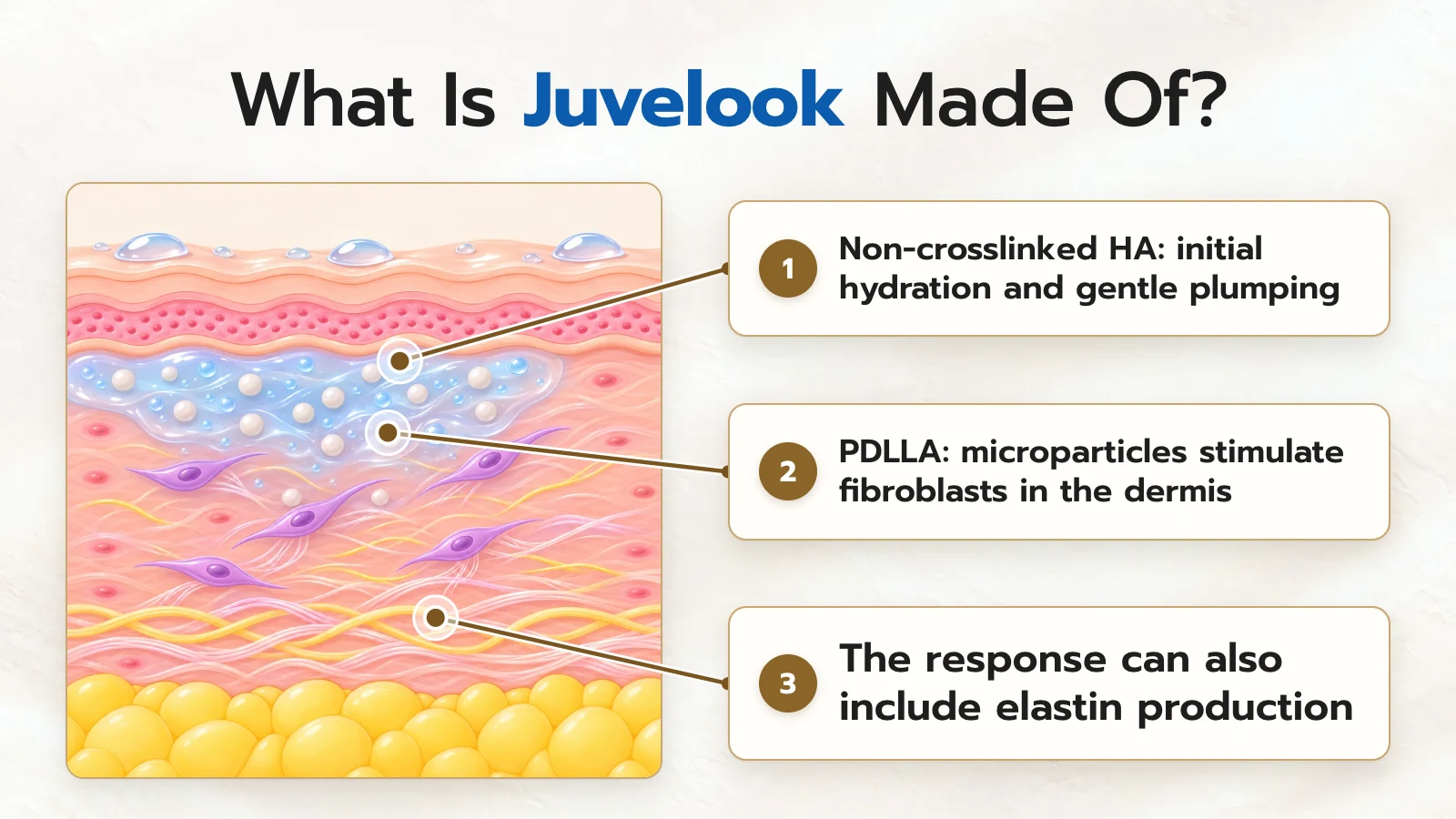
The combination is intended to improve the condition of the skin rather than build a sharply defined facial contour. Its two components have different jobs: HA contributes moisture early, while PDLLA supplies the stimulus for a longer tissue-building response. This is why Juvelook is described as both a skin booster and a biostimulator.
The Two Components
- PDLLA (poly-D,L-lactic acid): Microparticles stimulate fibroblasts in the dermis, the cells that produce the skin’s supporting tissue. The response can also include elastin production, which relates to the skin’s resilience.
- Non-crosslinked HA: This water-binding component provides the initial hydration and gentle plumping. Its role is different from a crosslinked HA gel designed to maintain structural volume in a selected feature.
The sequence of hydration and tissue renewal is explained in How Does Juvelook Work?
Product information is available from Juvetek. For background on PDLLA, see the review published in Clinical, Cosmetic and Investigational Dermatology.
At Edition Clinic, we use Juvelook Classic for skin quality concerns such as pores, acne scars and fine lines. Prices and the treatment process are on the Juvelook in Bangkok page.
Juvelook vs Filler: Ingredients and Treatment Goals
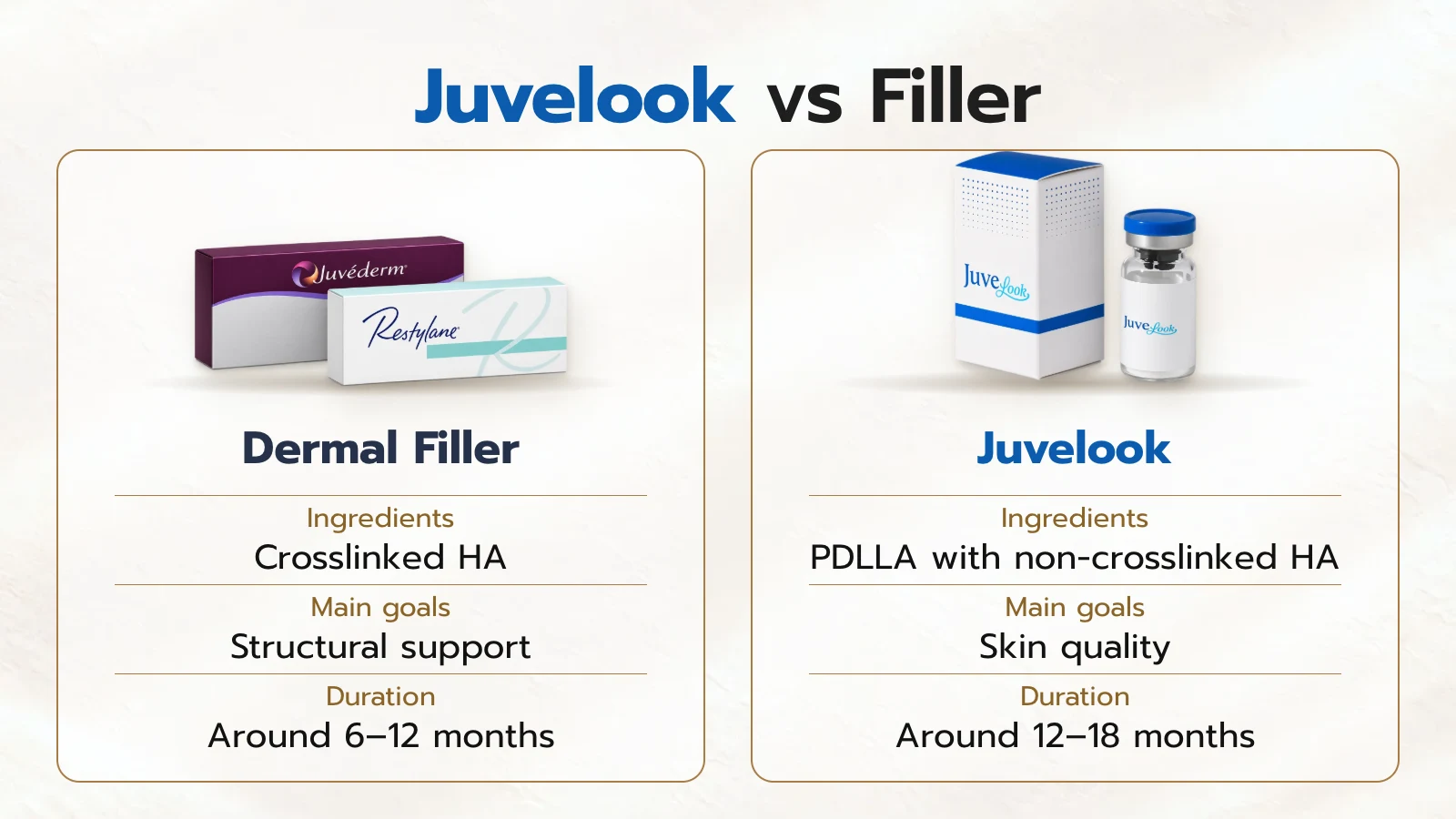
Juvelook and traditional fillers are injectable treatments with different ingredients, mechanisms and treatment goals.
| Feature | Dermal Filler | Juvelook |
|---|---|---|
| Ingredients | Crosslinked HA, typically formed into a volume-supporting gel | PDLLA with non-crosslinked HA |
| Main action | Adds volume directly beneath the skin | Encourages the production of the skin’s own collagen |
| Main goals | Structural support, deeper hollows, facial contours and volume in areas such as the cheeks, chin or lips | Skin quality: texture, pores, fine lines, acne scars and thin or crepey under-eye skin |
| When changes appear | Immediate volume after injection | Early hydration from HA, followed by gradual changes over weeks to months |
| Typical course | Often one appointment for the initial correction | Commonly three visits, about one month apart |
| Duration | Often around 6–12 months, depending on the product and area | Around 12–18 months or longer after the initial course |
| Adjusting the result | HA gel can be dissolved with hyaluronidase when appropriate | The collagen response cannot be removed in the same way as an HA gel |
The two can be included in the same treatment plan when both structural volume and skin quality need attention. For example, a doctor may use dermal fillers for a deeper hollow and Juvelook for the surrounding skin. The choice follows the problem being treated rather than treating the products as interchangeable.
Not Sure Which Treatment Is Right for Your Skin?
Every face is different. Our doctor provides a free 1:1 consultation to assess your skin, recommend the right approach — filler, Juvelook, or something else entirely — and give you a clear, upfront quote with no pressure.
💬 Get a Free Consultation800+ reviews across Google & GoWabi · 6,700+ patients treated
How Does Juvelook Work?
Juvelook pairs rapid hydration from HA with the longer process of collagen formation stimulated by PDLLA.
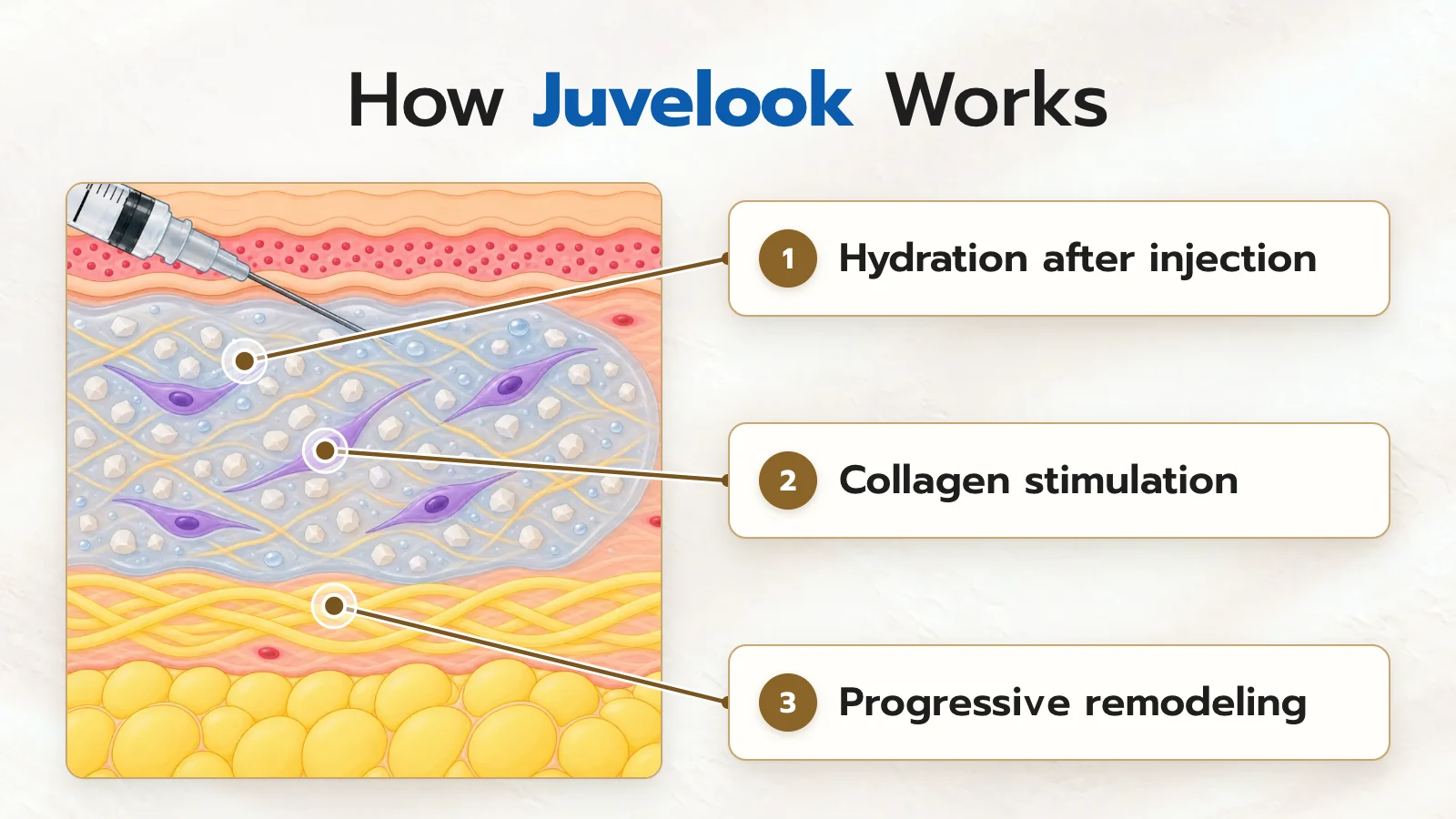
Step 1: Hydration after Injection
The non-crosslinked HA in Juvelook attracts water into the skin, creating early softness and plumpness. This initial effect helps the skin look more hydrated; it is not newly formed collagen. The HA is gradually absorbed as the treatment progresses.
Step 2: Collagen Stimulation
Over the next two to four weeks, PDLLA activates fibroblasts, the cells involved in producing the skin’s supporting tissue. New collagen and elastic fibers then contribute to the developing response.
At Edition Clinic, patients often notice their skin starting to feel firmer and more resilient around the 3 to 4 week mark, even before the visible changes become obvious.
For further background, see the clinical study on injectable PDLLA for skin rejuvenation.
Step 3: Progressive Remodeling
Skin remodeling continues over approximately three to six months as collagen develops. The PDLLA gradually breaks down and is absorbed, while the newly formed tissue supports improvements in firmness and texture.
A course of Juvelook treatment commonly consists of three sessions about a month apart. Results may last around 12–18 months, with the response varying between individuals.
Who Should Choose Juvelook Over Filler?
Choosing between Juvelook and filler depends entirely on what you're trying to achieve. In Edition Clinic's experience with both fillers and biostimulators, the best results come from matching the treatment to the specific concern — not from assuming one is "better" than the other.
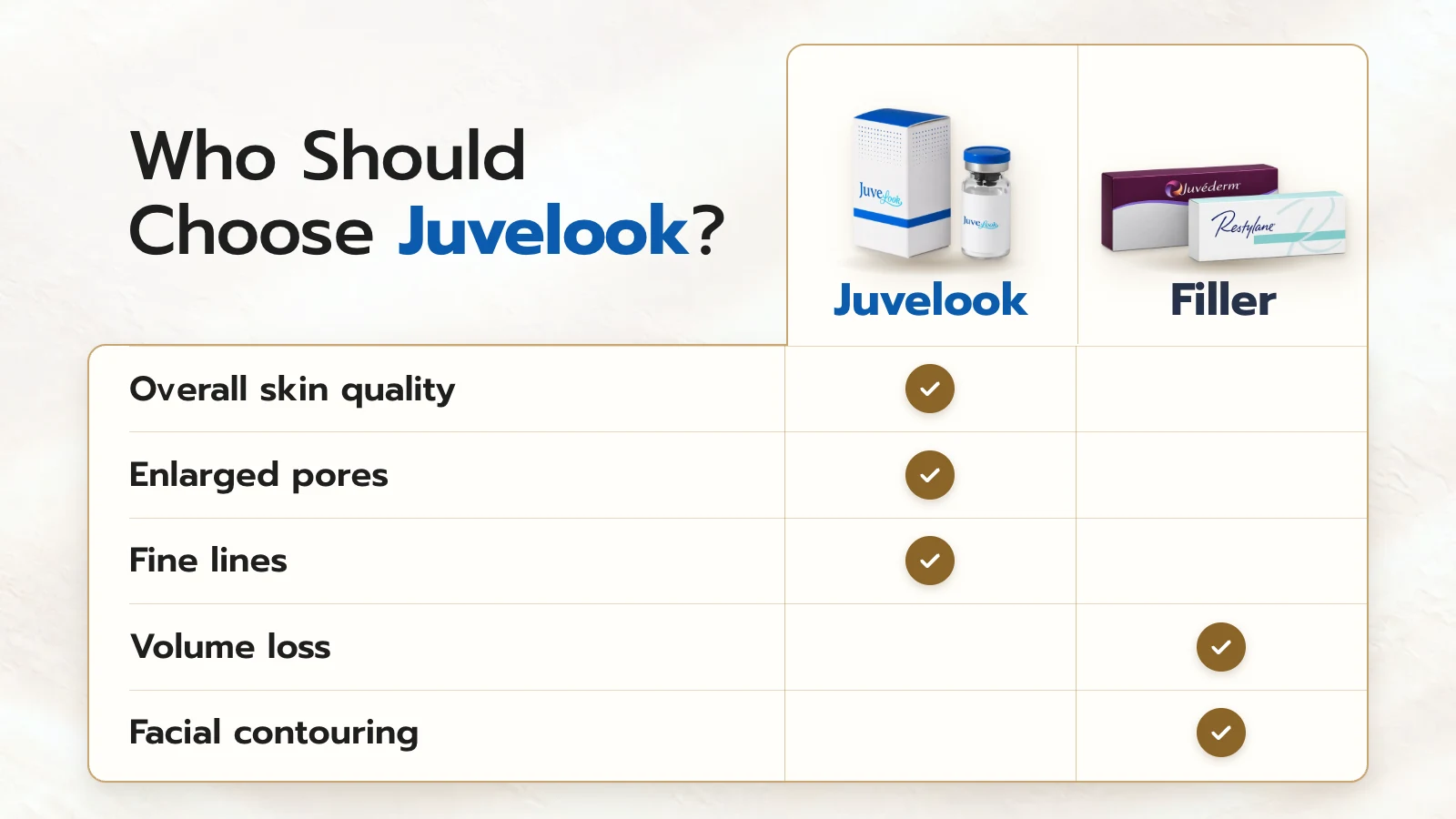
Here's a practical guide based on common skin goals.
Choose Juvelook if your main concern is:
- Overall skin quality: Dull, tired-looking skin that lacks radiance, even without specific wrinkles or volume loss. Juvelook's collagen stimulation improves the skin from within, delivering a natural glow that fillers simply don't provide.
- Enlarged pores and rough texture: PDLLA-driven collagen renewal refines skin texture over time, making pores appear smaller and the surface smoother.
- Fine lines and early aging signs: Subtle creases around the eyes, forehead, or mouth that don't need volume — just healthier, more resilient skin.
- Under-eye darkness and crepiness: The delicate under-eye area often responds better to Juvelook i (designed specifically for this zone) than to traditional fillers, which can sometimes look unnatural in thin-skinned areas.
Choose filler if your main concern is:
- Volume loss: Sunken cheeks, hollow temples, or thinning lips where you need immediate structural restoration.
- Facial contouring: Chin projection, jawline definition, or cheek augmentation — areas where precise volume placement matters.
- Deep folds: Nasolabial folds or marionette lines that need direct filling to smooth out.
And if you're dealing with both? That's common — and the two treatments complement each other well. At Edition Clinic in Thonglor, many patients combine Juvelook treatment for overall skin quality with targeted filler for specific volume concerns, all in a single visit.
💡 Considering Other Skin Boosters?
Juvelook occupies a unique space between traditional skin boosters (like Profhilo or Rejuran) and collagen stimulators (like Sculptra). If you're comparing options, the guide on Profhilo vs Skinvive covers the skin booster landscape in detail.
Juvelook Before and After: What Results Can You Expect?
Juvelook delivers gradual, cumulative results that become more noticeable with each session. Most patients see meaningful improvement in skin texture, hydration, and overall radiance after completing the recommended 3-session protocol — one treatment per month for three consecutive months.
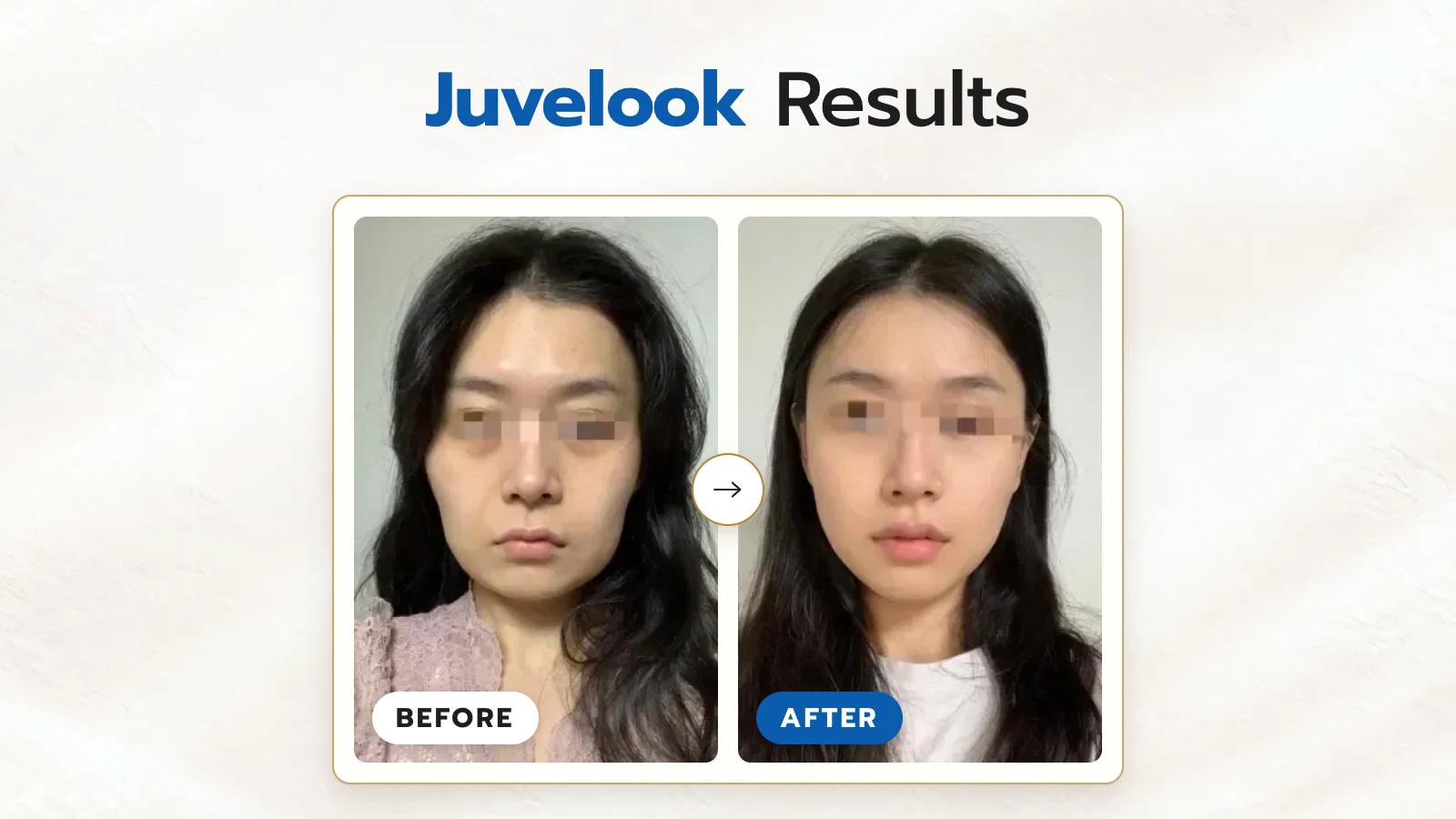
The recommended Juvelook treatment course consists of 3 sessions spaced one month apart for the initial course, followed by maintenance treatments every 6 to 12 months. Each session takes about 45 to 75 minutes including numbing, depending on the treatment area.
Downtime is minimal — most patients return to their normal routine the same day, with only mild redness, swelling or small bumps that typically settle within 1 to 3 days.
Want to Make Sure Juvelook Is Safe for Your Skin?
Our medical team at Edition Clinic, established in 2023, will give you honest advice — including if a different treatment would work better for your specific concerns.
💬 Message Us on WhatsAppAll treatments performed by licensed medical professionals
Is Juvelook Safe? Side Effects and Aftercare
Juvelook has a strong safety profile. It is approved as a medical device by Korea’s Ministry of Food and Drug Safety (MFDS, formerly KFDA) and is CE-marked as a Class III medical device in Europe. In Thailand, it is officially imported by Juvetek. Both active ingredients — PDLLA and hyaluronic acid — are biodegradable and naturally metabolized by the body, leaving no permanent residue.
Common Side Effects
Juvelook side effects are generally mild and temporary. Most patients experience slight redness, minor swelling, small bumps or tiny needle marks at the injection site. These typically settle within 1 to 3 days.
Bruising may occur in some cases but usually fades within a week. Serious complications like nodules are rare and are most often associated with improper technique or incorrect dilution — which is why choosing an experienced doctor matters.
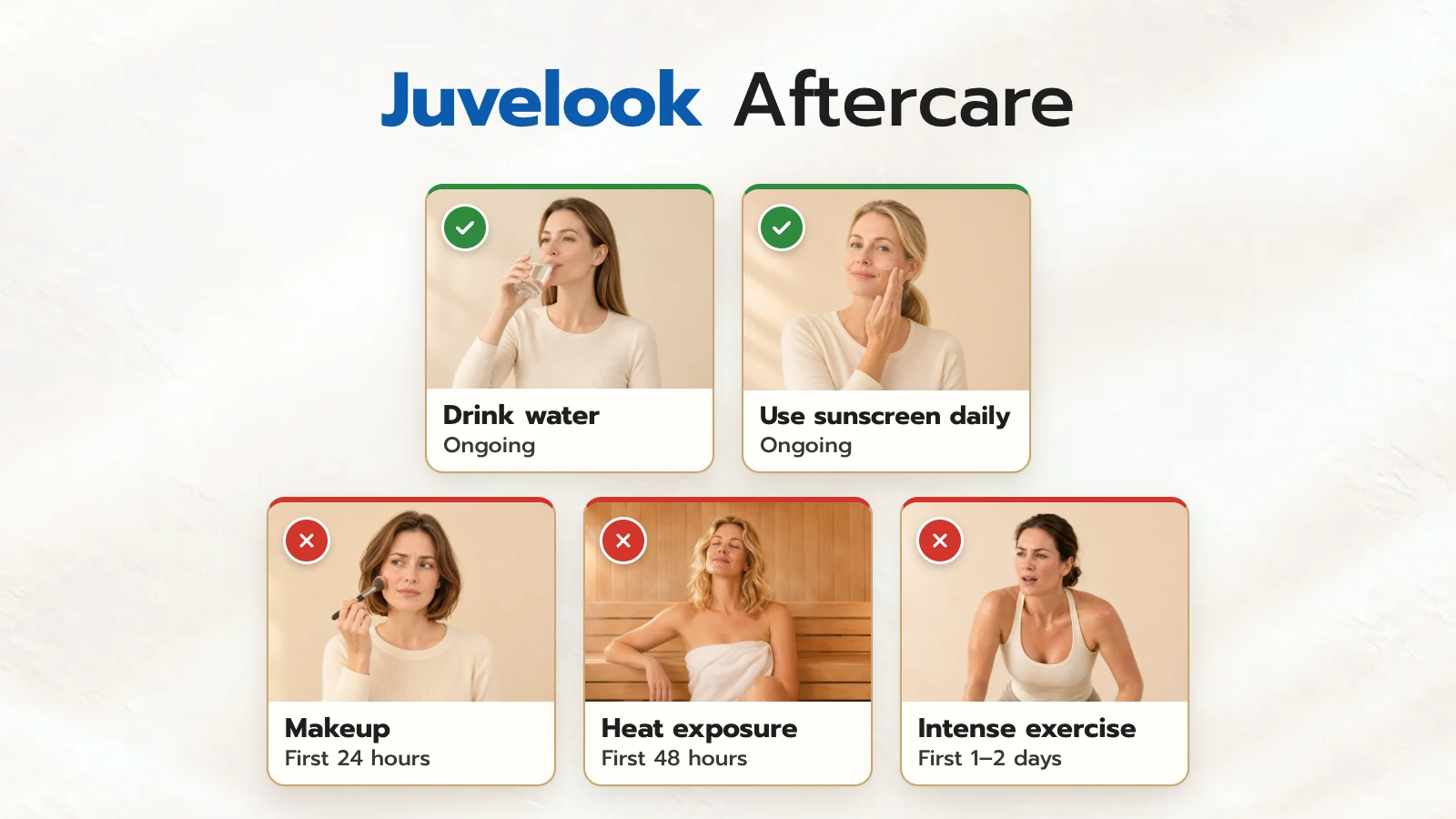
Aftercare Guidelines
- First 24 hours: Avoid makeup on the treated area to minimize infection risk.
- First 48 hours: Avoid heat exposure — saunas, hot baths, and intense sun.
- First 1–2 days: Skip intense exercise or activities that cause heavy sweating.
- Ongoing: Drink plenty of water (helps the HA component perform optimally) and use sunscreen daily.
- Do not massage the treated area unless your doctor specifically instructs otherwise.
All treatments at Edition Clinic are performed by licensed medical professionals. Results may vary between individuals based on skin condition, age, and lifestyle factors.
How to Choose the Right Clinic for Juvelook
Juvelook's effectiveness depends heavily on the skill of the injector and the quality of the product used. Choose a clinic where a doctor performs the injection and the product is genuine.
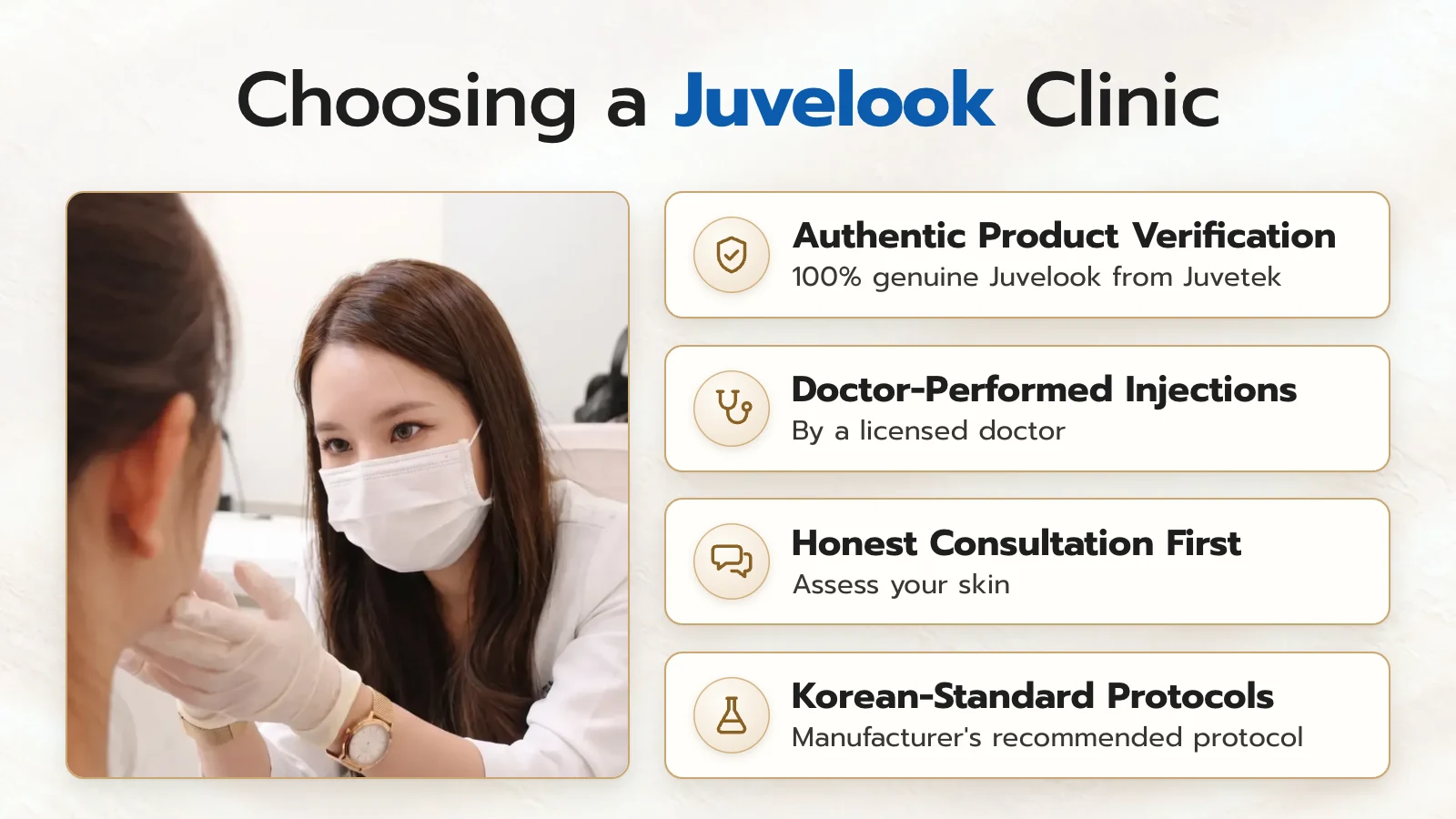
Here's what to look for when evaluating clinics for Juvelook treatment near BTS Thong Lo or elsewhere in Bangkok.
- Authentic product verification: Confirm that the clinic uses 100% genuine Juvelook from Juvetek. Counterfeit products are a real concern in the Bangkok market — ask to see the product packaging and verification.
- Doctor-performed injections: Juvelook should be injected by a licensed doctor, not delegated to a nurse or therapist. The injection depth, dilution ratio, and technique all significantly affect results.
- Honest consultation first: A good clinic will assess your skin and tell you if Juvelook is actually the right treatment — or if something else would serve you better. Be cautious of clinics that recommend Juvelook (or any treatment) before examining your skin.
- Korean-standard protocols: Since Juvelook is a Korean innovation, clinics that follow the manufacturer's recommended protocol (including proper dilution, injection techniques, and treatment spacing) tend to deliver more consistent results.
- Follow-up care included: Ask whether the clinic provides post-treatment follow-up to monitor your results and adjust the treatment plan if needed.
Ready to Try Juvelook?
Doctor-led treatment · Starting from 2,500 THB
📅 Book Your Appointment800+ reviews across Google & GoWabi · 6,700+ patients treated
Clinic-wide patient count: 6,717 unique patients treated from 7 August 2023 to 1 October 2026, excluding repeat visits. This is not a treatment-specific count.
Frequently Asked Questions About Juvelook
1. Can Juvelook and filler be done together?
Yes — Juvelook and dermal fillers are injected into different layers of the skin, so they can be safely combined in the same session. Many patients use Juvelook for overall skin quality and filler for targeted volume. Your doctor will recommend the best approach during your consultation.
2. How many Juvelook sessions do I need?
The recommended protocol is 3 consecutive sessions, spaced one month apart. After completing the initial course, maintenance treatments every 6 to 12 months help sustain results.
3. Is Juvelook the same as Sculptra?
No. While both are collagen stimulators, they use different active ingredients. Juvelook combines PDLLA (Poly-D,L-Lactic Acid) with hyaluronic acid, providing both immediate hydration and long-term collagen building. Sculptra contains only PLLA (Poly-L-Lactic Acid) and focuses primarily on collagen stimulation without the hydrating HA component.
4. How long until I see results from Juvelook?
You will notice immediate hydration and subtle plumping from the HA component. The collagen-stimulating effects of PDLLA begin around 2 to 4 weeks after treatment, with continued improvement over the following 3 to 6 months as new collagen forms.
5. Is Juvelook approved?
Yes. Juvelook is approved as a medical device by Korea’s MFDS (Korean FDA) and is CE-marked in Europe. In Thailand, it is officially imported by Juvetek. The active ingredients — PDLLA and hyaluronic acid — are both biodegradable and have long histories of safe medical use.
6. How much does Juvelook cost in Bangkok?
At Edition Clinic, Juvelook starts from 2,500 THB for under-eye treatment (1cc). The total cost depends on the treatment area, how many cc you need, and your specific skin concerns. A free consultation will give you a clear, upfront quote.
7. Does Juvelook hurt?
Most patients report only mild discomfort. A topical numbing cream is applied before the procedure, and the injection uses a fine needle or blunt cannula. The treatment typically takes 45 to 75 minutes including numbing, depending on the area.
8. Can I combine Juvelook with Botox or lifting treatments?
Yes. Juvelook can be combined with Botox, as they target different concerns and skin layers. It can also be paired with lifting treatments like Ultraformer MPT. Your doctor will advise on the ideal sequence and timing.
9. How long does Juvelook last?
Results typically last 12 to 18 months after completing the recommended 3-session course. Some patients experience benefits for up to 2 years depending on their skin condition and lifestyle. Maintenance sessions every 6 to 12 months help extend the results.
10. What is the difference between Juvelook Classic and Juvelook Volume?
Juvelook Classic focuses on skin quality improvement — refining texture, reducing pores, and building collagen for a natural glow. Juvelook Volume has larger PDLLA particles designed for volume restoration and lifting in areas like cheeks, temples, and nasolabial folds. At Edition Clinic, we offer Juvelook Classic.
Still Not Sure If Juvelook or Filler Is Right for You?
Our doctor will listen to your concerns and recommend what's actually needed — nothing more. Free consultation, no obligation.
