

Can You Fly After Botox or Filler? Timing, Aftercare and Trip Planning

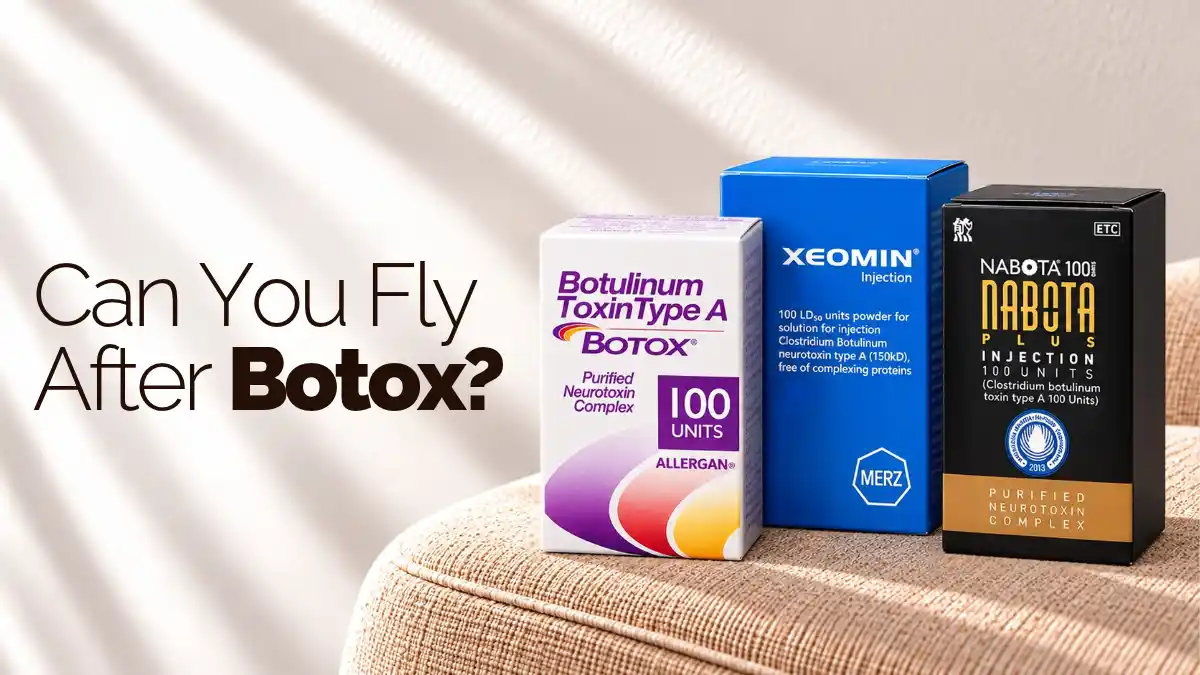


Table of ContentsShow / Hide
Written & Medically Reviewed by

- Medical Doctor, Chulalongkorn University — Second Class Honors
- Dermatology (International Program) 2024–2025, Chulabhorn International College of Medicine, Thammasat University
- 3 Years Experience in Aesthetic Medicine
Key Takeaways
Dr. Mild at Edition Clinic suggests a 24–48-hour buffer before flying after Botox so early bruising or swelling can be monitored before you leave. Stay upright for the first 4 hours and avoid rubbing, massage and pressure on the injection sites. Drink water, use a gentle moisturizer for cabin dryness and skip alcohol for at least 24 hours.
Yes, you can generally fly after Botox. Normal aircraft cabin pressure does not make the toxin migrate or change its effect. Some providers advise an initial 4–6-hour wait after injection to allow the toxin to bind to its target, so departure timing still matters.
Can You Fly After Botox?
Botox treatment does not usually rule out air travel. Cabin pressure is not expected to displace the toxin or undo the result. Your departure still needs to fit the initial aftercare period.
Early aftercare can be harder to follow during a flight. A tight sleep mask or sleeping against a window can put pressure where you were injected, while a long journey also takes you away from the injector if a reaction needs assessment.
The advice below concerns Botox. If you also had filler, use the separate guidance on flying after Botox and filler together, because the recovery considerations are different.
How Soon Can You Fly After Botox?
Many providers recommend waiting 24–48 hours before flying after Botox. Edition Clinic's guidance is about 24 hours, with the timing adjusted to your recovery. This buffer gives early redness, swelling or bruising time to settle and leaves an opportunity to contact the injector before you leave.
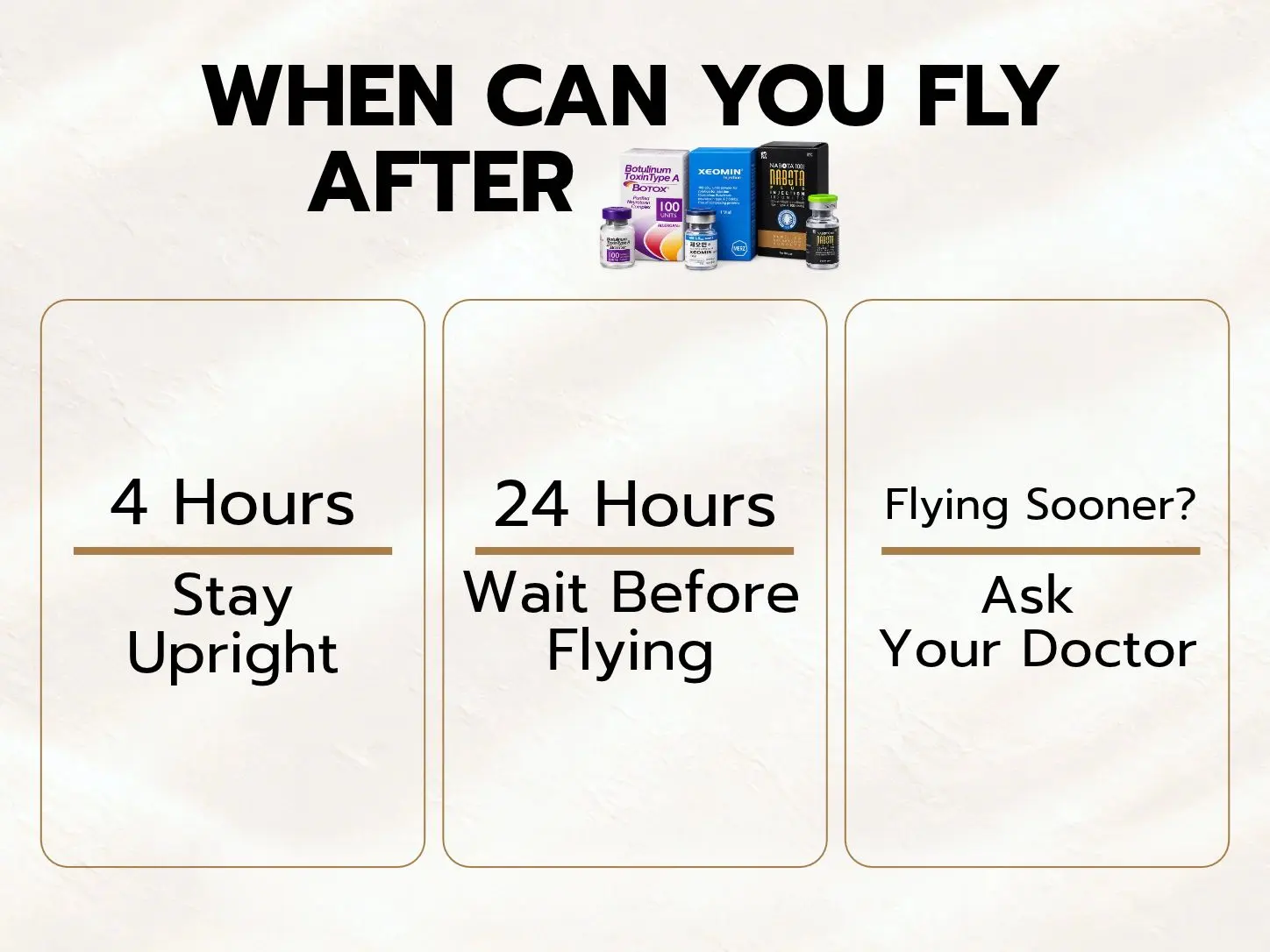
A 4–6-hour wait appears in some providers' advice, particularly for a same-day flight after the initial upright period. It should not be treated as automatic clearance for every patient. The early positioning precautions, the length of the journey, your response to treatment and any procedure performed at the same appointment still matter.
- If the flight is later that day: tell the injector before treatment so the appointment and aftercare can be assessed against the actual departure time.
- If you have new or worsening symptoms: ask for advice before leaving for the airport; an elapsed waiting period does not replace a symptom check.
When a patient tells me they are flying soon, I plan around the departure date first, and I would rather do a little less than rush a result before a flight.
Evidence Behind Waiting Advice
A 2025 multicentre study in Toxins reviewed 5,014 upper-face Botox patients who followed a 10-minute precaution protocol. It did not investigate flying, had no control group and used no statistical testing. Its findings do not establish a universal minimum interval before a flight.
How Long Before a Flight Should You Get Botox?
Plan Botox around 10–14 days before your trip if you want time for the full cosmetic result to appear. This is different from the shorter interval before boarding a plane. Scheduling ahead also gives minor marks time to fade and makes a review easier to arrange before departure.
A first appointment or a trip built around an important event may need more room. Some providers suggest 2–4 weeks, especially when it is useful to assess your individual response or leave space for a follow-up.
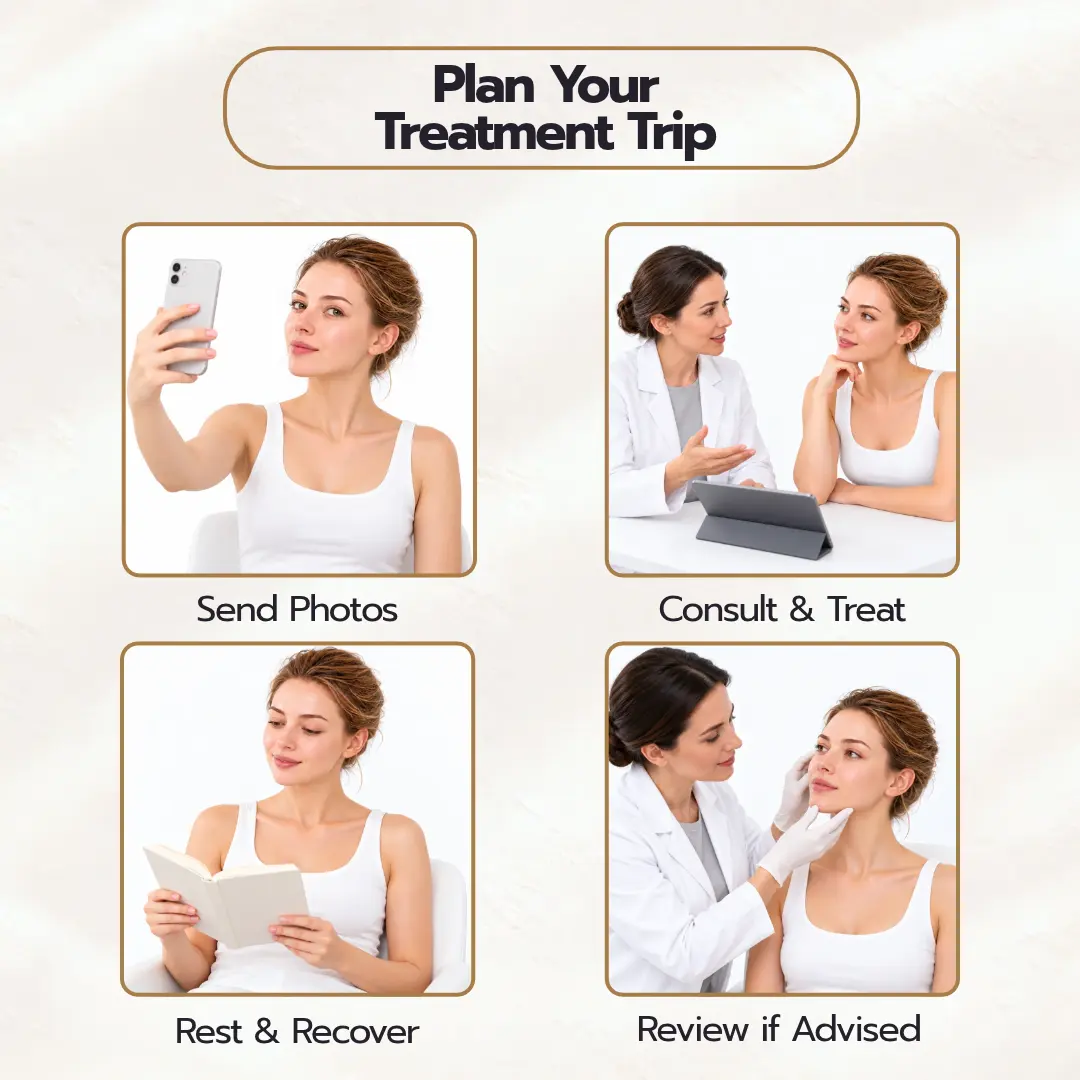
At Edition Clinic I ask for the flight date at the consultation, because a good plan leaves time for me to see you again before you leave.
Visiting Bangkok for Treatment
Visitors to Bangkok get the most from treatment when the consultation happens early in the stay. Booking the appointment before you land lets the doctor fit the session around your other plans. Holidays with saunas, long massages or heavy drinking need a gentler schedule after injections.
Message the clinic with your arrival and departure dates, and a plan for Botox, filler or both can be suggested for the time you have.
Living in Bangkok and Flying Out Soon
Residents of Bangkok who travel often for work can book around their travel calendar instead of squeezing treatment in. A gap after a trip, rather than just before one, gives the doctor time to review the result. Business trips with long meetings and late dinners feel easier once swelling has settled.
Mention regular trips at your first visit. Botox maintenance appointments can then be booked around them.
What to Do on the Flight After Botox
Keep pressure off the injection sites, stay hydrated, avoid alcohol and follow the initial upright period when flying after Botox.
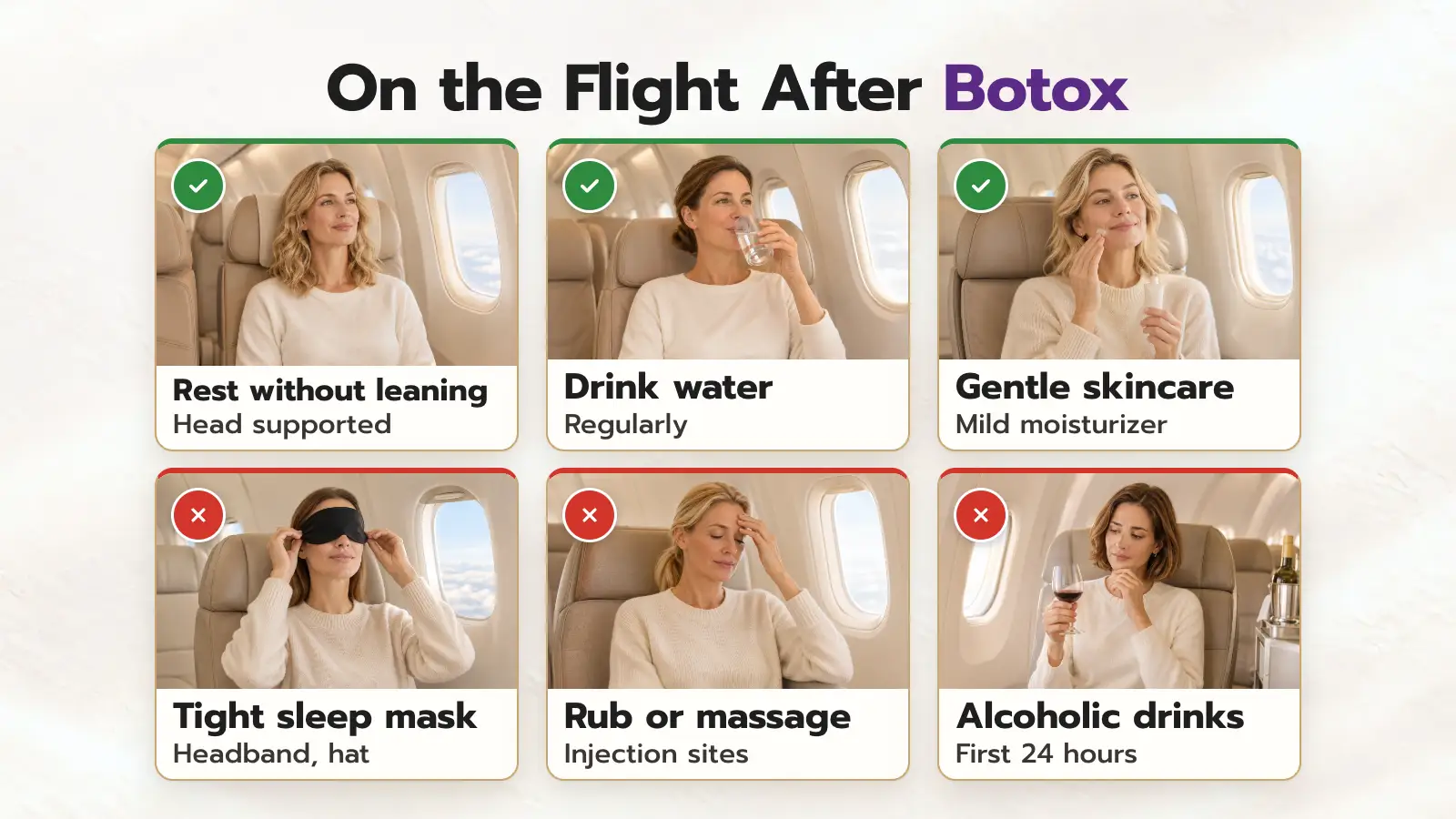
- Rest without leaning on the treated area. Keep your head supported without pressing your forehead or jaw into a seat, window or firm travel pillow. Do not rub or massage the sites, and avoid lying flat during the initial upright period.
- Choose accessories carefully. Skip a tight sleep mask, headband, hat or heavy headphones if they press across the injection sites.
- Drink water regularly. The low humidity in the cabin can leave your skin feeling dry.
- Use gentle skincare. Apply a mild moisturizer to dry areas that were not injected. Keep fresh injection points untouched and avoid vigorous cleansing wipes.
- Skip alcoholic drinks during the first 24 hours. Alcohol can add to bruising and swelling, so include airport-lounge drinks in the same precaution.
For unusual or worsening symptoms, follow the guidance on when to get medical help.
Does the Treatment Area Change Anything?
The treatment area usually changes practical aftercare more than the basic advice about flying after Botox. Initial precautions still apply across facial treatments, but the objects that can press on an injection site and the discomfort you notice may differ.

- Forehead, frown lines and crow's feet: be careful with sleep masks, tight hats, headbands and headphones near the temples. Resting your upper face against a window or pillow can put pressure on these areas.
- Masseter or jaw treatment: keep a wraparound travel pillow from pushing into the jaw and avoid resting your chin in your hand. Tough snacks or prolonged gum chewing may aggravate early jaw tenderness, so choose food that is comfortable to chew.
- Underarms or other body sites: avoid straps that dig into fresh injection points. For calf treatment or another therapeutic plan, ask about site-specific aftercare before a long journey.
Migraine treatment can involve the scalp, neck or shoulders, so check whether the seat headrest presses on a treated area. Dry air, noise, travel stress or pressure changes can also trigger a headache without displacing the injections. Discuss your usual travel triggers and aftercare needs with the clinician before the journey.
For jaw-slimming treatment, the masseter Botox guide explains the treated muscle and how the result develops.
Does Cabin Pressure Affect Botox?
Normal aircraft cabin pressure does not cause Botox to migrate. The toxin binds at nerve endings in the treated muscles; a change in cabin pressure does not push it around the face. Pressure from an object against an injection site is a separate aftercare concern.
Dry cabin air and the conditions of a long journey can still make temporary puffiness, redness, bruising or a headache more noticeable. If a symptom is severe or getting worse, use the warning-sign guidance instead of assuming it is simply a normal effect of flying.
What to Avoid After Botox
Rubbing or massaging the treated area, strenuous exercise, alcohol and high heat are the main activities providers advise avoiding immediately after Botox. Many instructions focus on the first 24 hours, while some extend individual restrictions to 24–48 hours. Avoid lying flat during the initial upright period, commonly the first 4 hours, and follow the timetable supplied for your treatment.
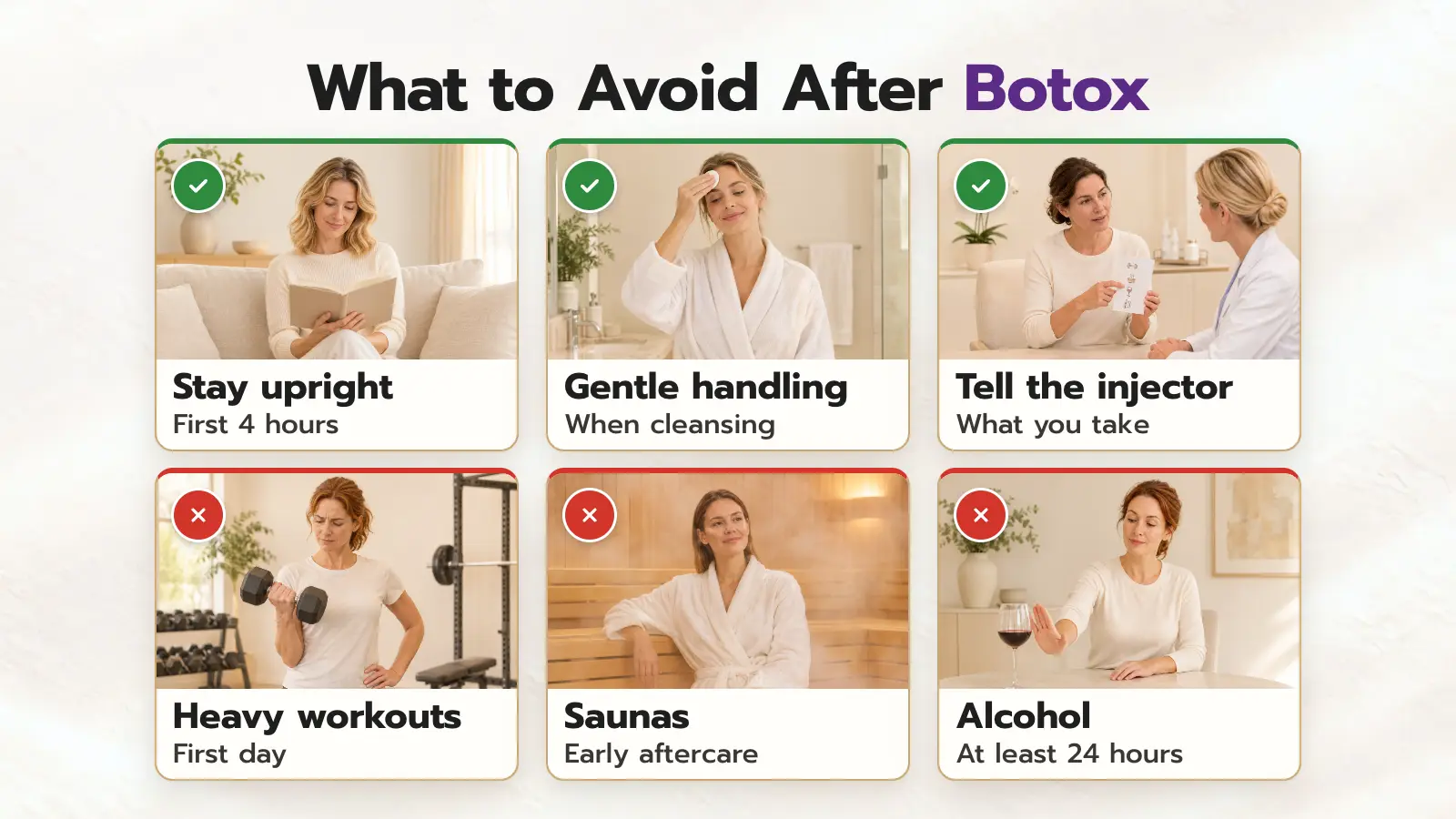
- Heavy workouts or lifting: postpone strenuous exercise during the first day, or longer if your instructions specify it.
- Heat and steam: avoid saunas, steam rooms, hot tubs and very hot showers during the early aftercare window.
- Alcohol: avoid it for at least the first 24 hours, including before boarding and during the flight.
- Facials and other skin procedures: do not add a massage, peel, microneedling or laser session without checking the interval with the treating clinic. The appropriate gap depends on the procedure.
Fresh injection points also need gentle handling when cleansing or applying makeup. Avoid heavy application over the sites immediately after treatment, and postpone strong exfoliating products if the skin is still irritated.
Medicines and supplements need individual advice. Tell the injector what you take, and do not stop prescribed medication to reduce bruising unless the doctor who prescribed it has advised you to do so.
Flying After Botox and Filler Together
If you have Botox and filler at the same appointment, plan around the filler recovery as well as the Botox aftercare. Many providers suggest at least 24–48 hours before flying after dermal filler, with a 3–5-day buffer or longer where swelling needs more time. A Botox-only interval should not be used to clear the combined treatment.
Lips, under-eyes and larger treatment plans may need extra time because swelling can be more noticeable. Recommendations for lip filler sometimes extend to 48–72 hours or longer, while biostimulators may need up to a week. The product, area and your recovery determine which guidance applies; these intervals are not interchangeable.
Access to follow-up matters as well as appearance. Rare filler complications, such as a blocked blood vessel, can need prompt treatment. Flying takes you away from the injector during early recovery, so know the filler warning signs that need urgent local assessment before departure.
Swelling and Bruising After Filler
Swelling and bruising after filler are common and temporary. At Edition Clinic, temporary swelling usually settles within a few days. The final result is easier to judge within 1–2 weeks.
Injection-site reactions are described in a 2021 meta-analysis of smile-line filler trials and a 2013 cheek-filler trial. Most filler reactions are mild, but a bruise can take longer to fade than swelling. Allow extra time if photographs soon after arrival matter to you.
Biostimulators and Travel
Radiesse can leave mild swelling for 1–3 days, so a review should fit your schedule before departure. The long-term follow-up of the US Radiesse trial concerns later outcomes; it does not establish when an individual is ready to fly after treatment.
Sculptra is usually given as a course of appointments. Arrange the remaining sessions around your travel dates, as well as allowing time after the current visit. The Sculptra vs filler guide explains how the products differ.
What Should You Check Before You Board?
A pre-flight checklist covering medical history, flight details, and aftercare access helps both the patient and the treating doctor plan around the departure. Before you board, check that the first aftercare window has passed and that you can reach the clinic from abroad.
Your pre-flight checklist:
- Medical history: you told the doctor about medicines, allergies and recent treatments.
- Flight details: the doctor knows your departure date and how long the flight is.
- Product record: you have the product name and the treated areas in writing.
- Aftercare: you have the written instructions and followed the first-day rules.
- Contact: you can reach the clinic by LINE or WhatsApp from abroad.
- On board: drink water, limit alcohol and avoid pressing on the treated area.
Keep the product record with your travel documents. Any doctor who sees you later needs it to give the right advice.
Mention every medicine and supplement at the consultation, and do not stop any of them without advice from the doctor who prescribed it.
If you are unsure about a symptom on the day of your flight, send a photo before you go to the airport.
What If Your Flight Is Sooner Than Ideal?
A flight sooner than ideal does not always rule out treatment, but it changes what is sensible to do. Botox alone is often still possible. Filler in a new area, or a large amount of product, is usually better saved for your next visit.
Say so as soon as possible, so there is time to choose between treating now, treating less or waiting.
Rushing a result to meet a departure time leaves no room to correct anything. A small, careful plan is usually the better trade.
Choosing a Lighter Plan for a Short Trip
A lighter plan for a short trip usually means fewer areas and smaller amounts, with the rest added later. Botox for movement lines is a common choice because swelling is minimal. The doctor recommends what can sensibly be done in the days you have.
Options the doctor may suggest:
- Botox only: treat movement lines now and leave filler for the next visit.
- One area: treat the main concern and plan the rest for later.
- Next trip: have the consultation now and the treatment when you return.
The doctor declines filler where the skin is very thin, and says so plainly when another option suits you better.
Side Effects to Watch for While Travelling
Difficulty breathing, swallowing or speaking, severe widespread weakness, or severe facial, lip or throat swelling after Botox requires immediate medical help. Seek emergency care where you are. During a flight, alert the cabin crew straight away; do not wait to get home or for a reply from the treating clinic.
Common Reactions and When to Get Help
Mild soreness, small bruises, redness, slight swelling or a temporary headache can occur after treatment. Travel may make these discomforts more noticeable. Contact the treating clinic if symptoms worsen, persist beyond the recovery you were advised to expect, or you develop a new or unusual change.
- A drooping eyelid or marked asymmetry: report it promptly so the provider can assess whether an examination or treatment is needed.
- Double or blurred vision: obtain urgent medical advice, particularly if it is sudden or occurs with other symptoms.
- Increasing pain, spreading redness, warmth or fever: arrange prompt medical assessment rather than assuming it is ordinary post-flight puffiness.
If You Also Had Filler
Pale, dusky or unusually painful skin, and any change in vision after filler, need urgent assessment. These filler-related warning signs should be distinguished from ordinary Botox injection-site bruising. Tell the local clinician which products and areas were treated.
Keep a Follow-Up Plan While Away
For a non-emergency concern, contact the treating clinic with clear photographs and a description of when the change started. Include the treatment date, product name and areas treated from your pre-flight treatment record, so the clinician has the context needed to assess the change.
A 2020 systematic review of complications after facial treatments abroad included only six retrospective studies covering 31 patients, with surgery and injectable procedures mixed together. The authors could draw no firm conclusions, so the review does not establish a Botox-specific risk from flying.
Why Choose Edition Clinic for Botox and Filler in Bangkok?
Every Botox and filler plan at Edition Clinic is made by a doctor who asks about your travel dates before treatment. Genuine products are used, and the price is shown before you decide. Edition Clinic is the official Bangkok branch of Edition Plastic Surgery, Seoul.

Botox and Filler Prices in Bangkok
Nabota prices in Bangkok are approximately 4,000–5,000 THB for 50 units in the published prices reviewed. At Edition Clinic, Nabota starts at 4,900 THB for 50 units. Other Botox brands and different unit counts have their own prices; your doctor recommends a brand and amount for your treatment area and goals.
Neuramis filler prices in Bangkok are approximately 5,000–6,000 THB per 1 ml in the published prices reviewed, with the product version affecting the quote. At Edition Clinic, Neuramis starts at 4,990 THB per 1 ml syringe. The filler options in Bangkok page lists every brand.
These approximate price ranges were checked on 30 October 2026. Package terms and included services can differ, so confirm the product, quantity and total quote before booking. The Botox in Bangkok page compares Edition Clinic's toxin brands and unit prices.
Consultation in English or Korean
Consultations are held directly with the doctor in English. You can ask about timing, products, areas and price in your own words, with your flight dates in front of you.
If you would prefer to talk in Korean, mention it when you book. The consultation is free, and there is no obligation to book treatment afterwards.
Getting Here and Booking
Edition Clinic is on the 4th floor of Marche 150 Thong Lo, open daily from 11:00 to 20:00, and you can book by LINE or WhatsApp.
 Address
- Room A408, 4th Floor, Marche 150 Thong Lo, Khlong Tan Nuea, Watthana, Bangkok 10110
 Nearest BTS
- BTS Thong Lo
 Opening hours
- Every day, 11:00–20:00
 Phone
- +66 92-255-8952
 How to book
- LINE @editionclinic or WhatsApp — free consultation
 Google Rating
Clinic-wide patient count: 6,717 unique patients treated from 7 August 2023 to 1 October 2026, excluding repeat visits. This is not a treatment-specific count.
Flying After Botox or Filler in Bangkok: Summary
Plan the appointment around the flight and the treatments involved. Use the Botox flight timeline, the combined-treatment guidance and the pre-flight checklist to prepare for your visit. If a serious symptom develops while you are away, seek local medical help promptly.
Frequently Asked Questions About Flying After Botox or Filler
1. Is it safe to fly the same day as Botox?
Answer: Usually not, because Edition Clinic's guidance is to wait about 24 hours after Botox before flying. The first hours are when you stay upright and avoid pressure on the area, and a day's gap also leaves time to spot an early reaction. The doctor can advise if your flight cannot move.
If a same-day flight cannot be avoided, mention it when you book so the plan can be adjusted.
2. Can flying make filler move or shift?
Answer: No, there is no evidence that a normal flight moves well-placed filler. Filler that looks uneven after a flight is usually swelling that settles over the following days. Gentle hands, no pressure on the area and plenty of water help on board.
If an area still looks uneven once the swelling settles, send photos to the clinic for review.
3. Why is advice on flying after filler so different between clinics?
Answer: Advice differs because no study has set a waiting time for flying after filler, so each clinic writes its own rule. Those rules usually reflect how much swelling to expect and how easily a patient can return. At Edition Clinic, the guidance is at least 24 to 48 hours, adjusted for your product and area.
Ask the reason behind any rule you are given. A good answer will explain both the number and how it fits your treatment.
4. Should you wait longer after lip or under-eye filler?
Answer: It depends on the area and the amount, because lips and under-eyes tend to show swelling more than deeper areas. A longer gap before a long flight or an important event may be suggested. Filler is not used where the skin is very thin.
Tell the doctor about any event planned soon after you land.
5. Can you sleep on the plane after Botox or filler?
Answer: Yes, once the first hours of aftercare have passed, sleeping upright in your seat is fine. Avoid pressing the treated area against the window or a tight pillow. An eye mask should sit loosely if you had Botox around the eyes.
A neck pillow that supports your head without touching your face is the easiest option.
References
- Santorelli A, et al. Are Post-Care Recommendations Following Upper-Face Botulinum Toxin Treatment Scientifically Necessary? A Retrospective Multicentre Study. Toxins (Basel). 2025. PMID 40864048
- Stefura T, et al. Tissue Fillers for the Nasolabial Fold Area: A Systematic Review and Meta-Analysis of Randomized Clinical Trials. Aesthetic Plast Surg. 2021;45(5):2300–2316. PMID 34255156
- Jones D, et al. Juvéderm Voluma XC pivotal trial for midface volume deficit. Dermatol Surg. 2013;39(11):1602. PMID 24093664
- Bass LS, et al. Calcium hydroxylapatite (Radiesse) for treatment of nasolabial folds: long-term safety and efficacy results. Aesthet Surg J. 2010;30(2):235–238. PMID 20442101
- Raggio BS, et al. Complications Associated with Medical Tourism for Facial Rejuvenation: A Systematic Review. Aesthetic Plast Surg. 2020. PMID 32040602
Planning Botox or Filler Around a Flight?
Book a free 1:1 consultation at Edition Clinic Bangkok and bring your travel dates.
