

What Is Radiesse? How CaHA Filler Works, What It Treats and What It Costs



Table of ContentsShow / Hide
Written & Medically Reviewed by

- Medical Doctor, Chulalongkorn University — Second Class Honors
- Dermatology (International Program) 2024–2025, Chulabhorn International College of Medicine, Thammasat University
- 3 Years Experience in Aesthetic Medicine
Key Takeaways
Radiesse is used for deep facial folds, facial contouring and hand volume loss. Hyperdilute Radiesse addresses skin laxity and texture over wider areas. Results can last up to two years, varying with the area and dilution. It cannot be dissolved with hyaluronidase and is generally avoided in the lips or under-eyes.
Radiesse is an injectable regenerative dermal filler and biostimulator containing calcium hydroxylapatite (CaHA) microspheres in a water-based gel. It restores volume and encourages the skin to make collagen and elastin, combining a filling effect with a response that develops over time.
What Is Radiesse Filler?
Radiesse is a biostimulating dermal filler made from microscopic calcium hydroxylapatite (CaHA) particles suspended in a gel carrier. It is injected beneath the skin to restore support, soften deeper folds and improve facial contours, while also stimulating the formation of collagen and elastin.
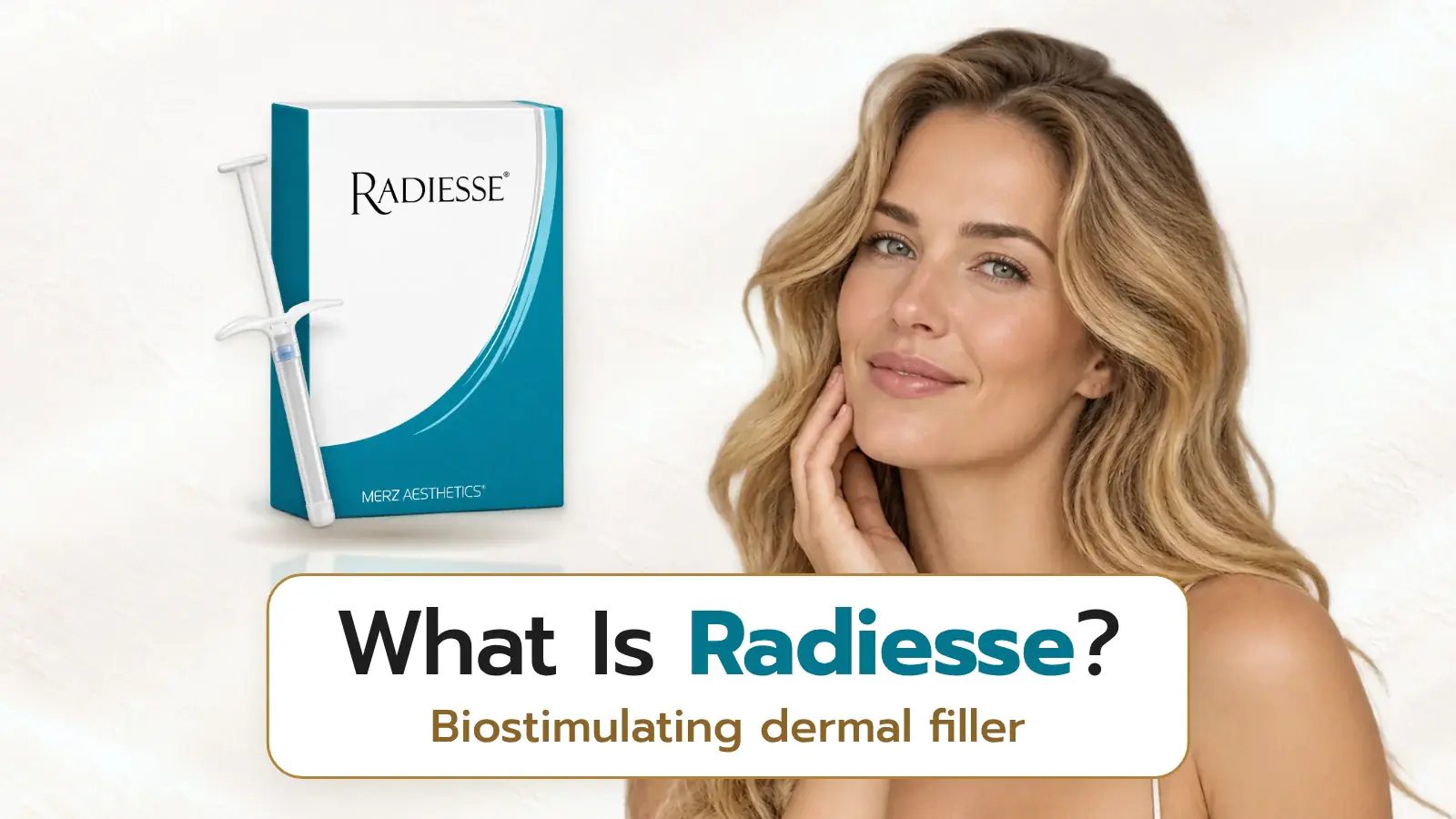
Hyaluronic acid (HA) fillers add volume partly by binding water. Radiesse belongs to a different family of fillers based on mineral particles. Merz Aesthetics makes Radiesse, and Edition Clinic uses Radiesse Plus, its lidocaine-containing formulation.
What Is Radiesse Made Of?
Radiesse contains synthetic calcium hydroxylapatite microspheres suspended in a water-based gel, with a composition of approximately 30% CaHA and 70% carrier gel. The gel contains sodium carboxymethylcellulose, sterile water and glycerin.
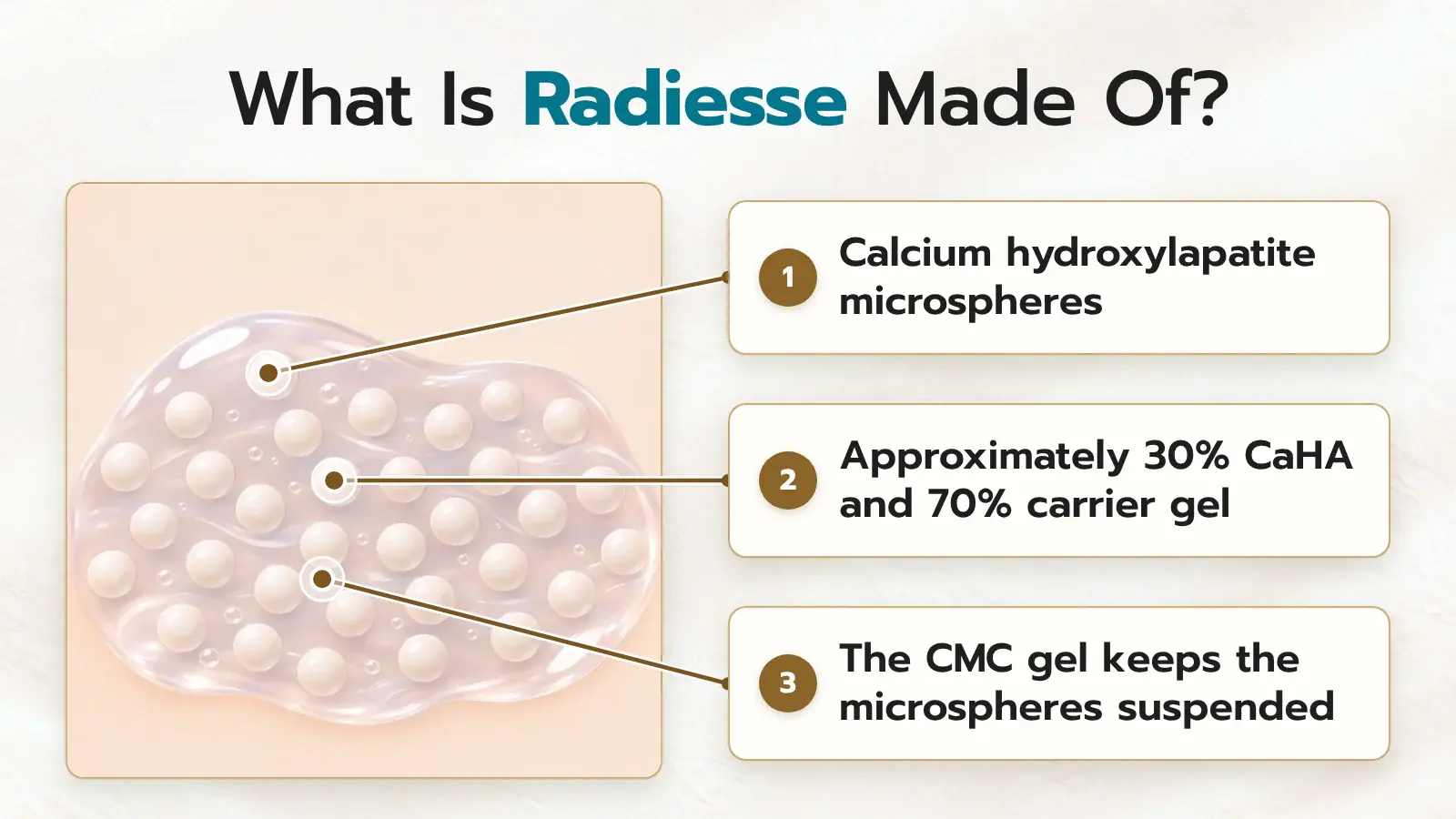
CaHA microspheres typically measure 25-45 microns in diameter. They are biocompatible and biodegradable, with mineral chemistry similar to the mineral component of human bones and teeth.
The CMC gel keeps the microspheres suspended and allows the material to be injected smoothly. Radiesse (+), or Radiesse Plus, adds 0.3% lidocaine to this base formulation.
How Does Radiesse Stimulate Collagen?
Radiesse combines immediate volume from its gel carrier with longer-term collagen and elastin stimulation around the CaHA microspheres. As the body absorbs the gel, the particles provide a scaffold that activates fibroblasts, the cells that make connective-tissue proteins.
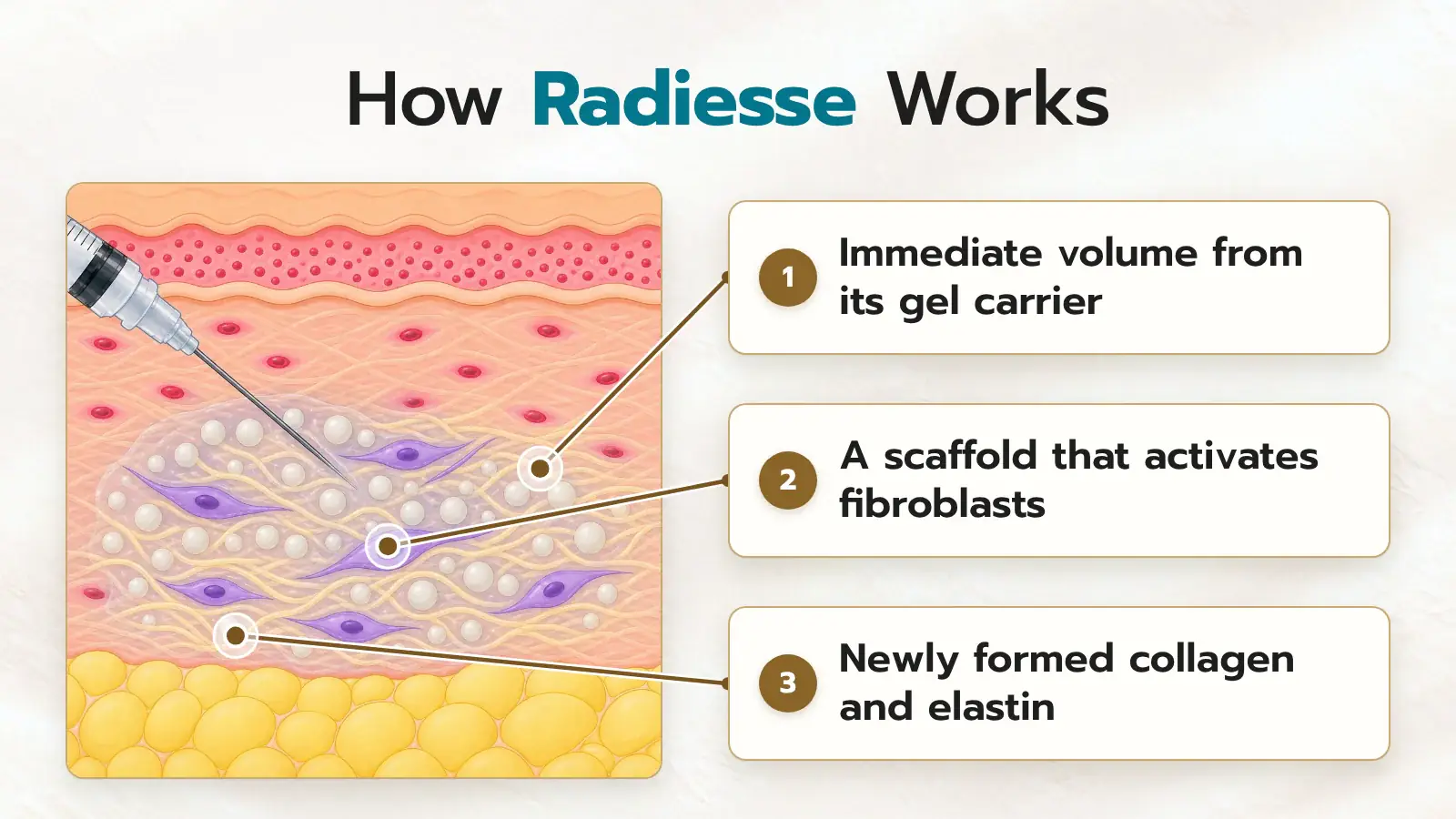
Collagen Types I and III form part of the new supporting tissue. The response also includes proteoglycans, which help tissue retain moisture, and angiogenesis, the formation of small blood vessels.
I explain Radiesse as two jobs in one syringe: it lifts on the day, and then it asks your own skin to rebuild support over the following months.
What Happens to the Gel and CaHA?
The carrier gel and CaHA particles are gradually absorbed and broken down by the body. Macrophages, cells involved in clearing material from tissue, metabolise the microspheres into calcium and phosphate ions. Newly formed collagen and elastin continue to provide support as the injected material is absorbed.
What Is the Difference Between Radiesse and Radiesse Plus?
Radiesse and Radiesse Plus share a CaHA-and-gel base. Plus contains 0.3% premixed lidocaine for injection comfort, while standard Radiesse has no premixed lidocaine. Plus is generally described as firmer and less dispersive, favouring targeted structural support. Both retain the filling and collagen-stimulating effects of CaHA, although further mixing can change their consistency.
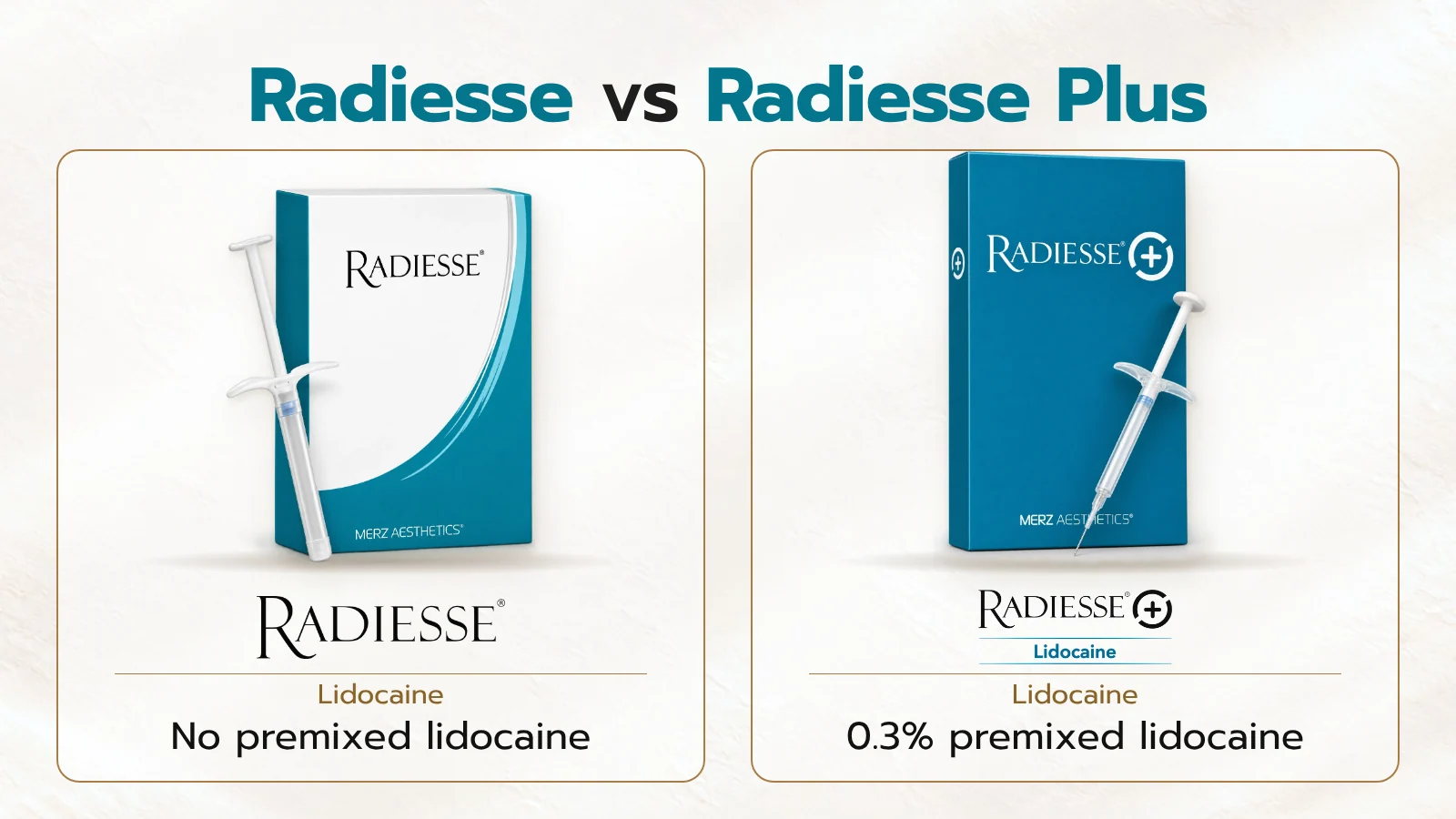
Radiesse Plus is commonly used for localised support in the jawline, chin and cheeks, while more dispersed preparations are used for broader skin-quality treatment. Its premixed anaesthetic also reduces the need for a separate lidocaine-mixing step.
Hyperdilute Radiesse describes a preparation technique, rather than a separate product variant. Either formulation may be intentionally thinned with saline, often alongside a local anaesthetic. The Plus label identifies the premixed lidocaine; it does not mean the product has already been hyperdiluted.
Where Can Radiesse Be Injected?
Radiesse can address deeper facial folds, lost volume and contour definition in the cheeks, chin and jawline, as well as volume loss on the backs of the hands. Diluted preparations are also used for skin laxity and crepey texture in areas such as the neck and chest.
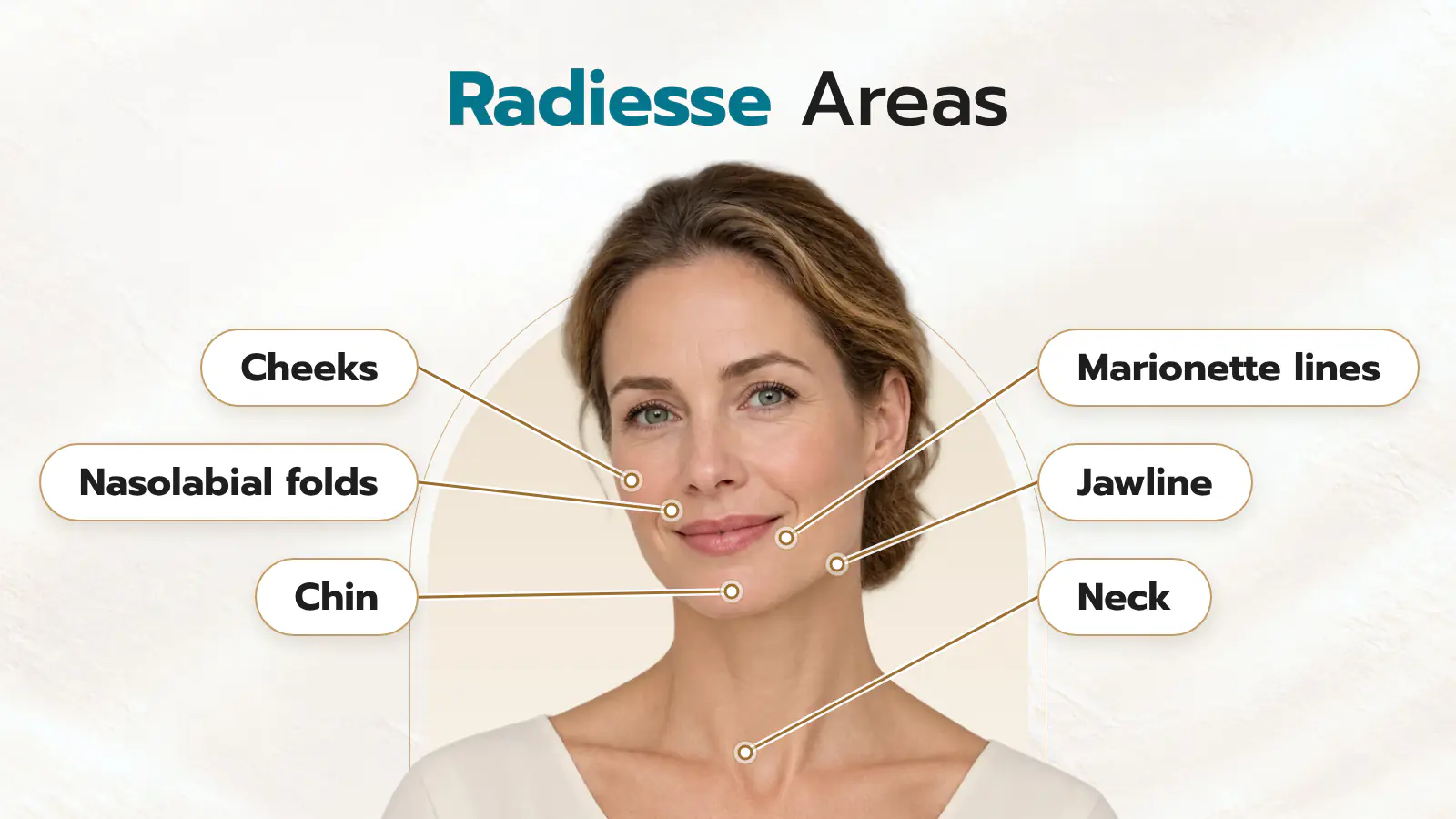
- Nasolabial folds: deeper creases running from the sides of the nose towards the mouth.
- Marionette lines and lower-face folds: creases below the mouth and areas that have lost support.
- Cheeks, chin and jawline: targeted volume and structural definition where the facial outline has softened.
- Backs of the hands: volume restoration that makes prominent veins and tendons less visible.
- Facial lipoatrophy: facial fat loss, including HIV-associated lipoatrophy, is another described use of CaHA.
The Radiesse treatment page shows the full face, midface, smile line and jawline plans where most patients start.
Hyperdilute Treatment Areas
Hyperdilute Radiesse is used on the neck and décolletage to address skin laxity, fine wrinkles and crepey texture. The aim is broader improvement in firmness and texture, with less emphasis on concentrated volume.
Body applications also include the upper arms, abdomen, thighs and areas above the knees. Some of these uses are off-label or involve specialised protocols rather than the standard approach to filling a facial fold.
Areas Generally Avoided
The lips, under-eye area, nose and glabella are generally avoided because of thin or mobile tissue and the risk of visible lumps or vascular complications. The glabella is the area between the eyebrows.
Is Radiesse a Filler or a Biostimulator?
Radiesse is both a dermal filler and a biostimulator. Its gel provides immediate filling and structural support, while its CaHA microspheres stimulate the skin to produce collagen and elastin. Biostimulatory filler is therefore a description of the same product's two roles.
The concentration changes the emphasis of treatment. At standard strength, Radiesse is used where structural volume is needed. Diluted or hyperdiluted applications distribute the CaHA across a wider area to improve firmness and texture, with less localised filling.
Who Is a Good Candidate for Radiesse?
Radiesse may suit healthy adults with facial volume loss, deeper wrinkles or reduced contour definition who want immediate support alongside gradual collagen stimulation. Suitability also depends on medical history and the intended area: ingredient allergies, active infection and bleeding concerns can rule out or delay treatment.
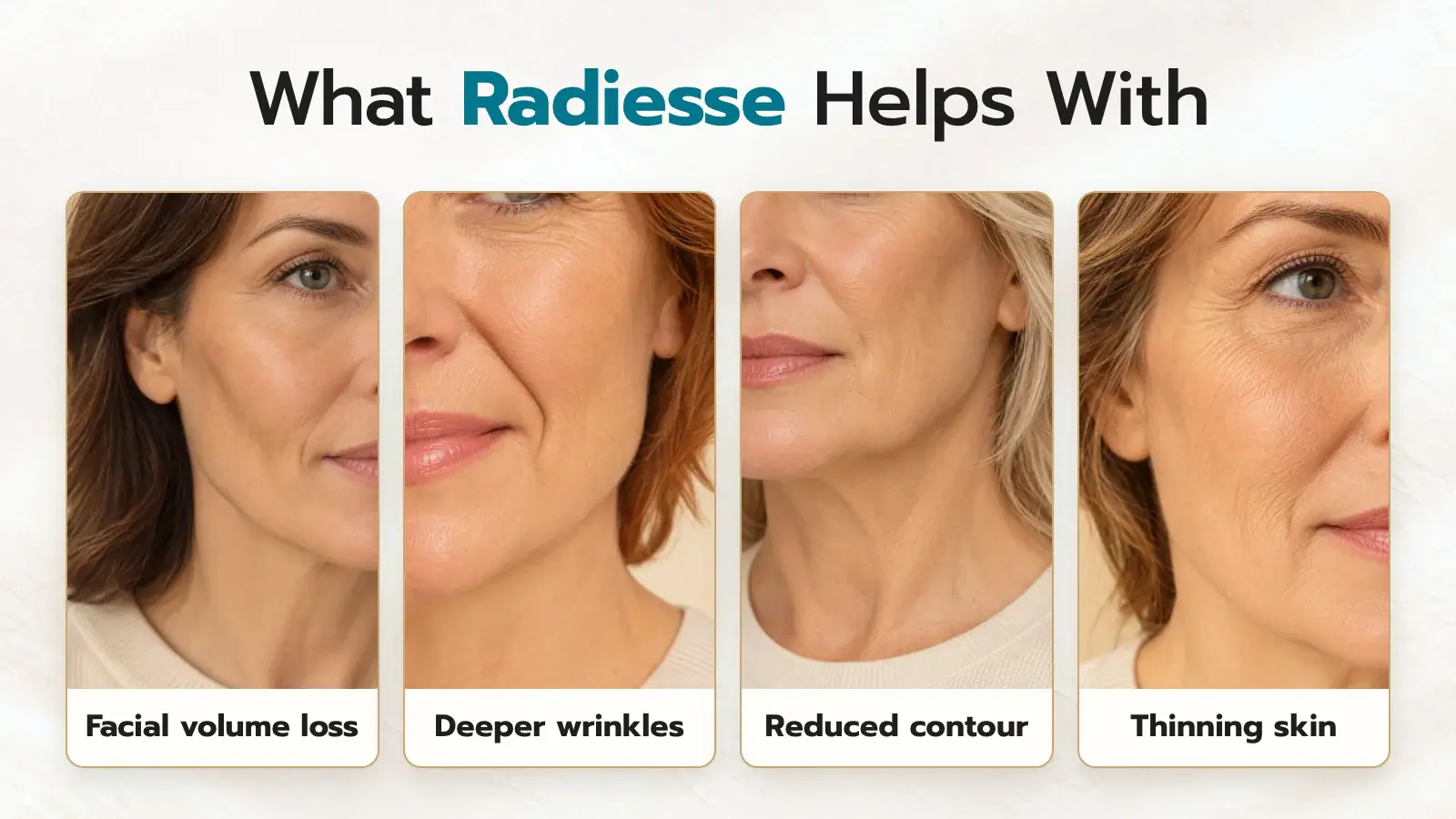
Adults in their 30s to 60s are commonly described as candidates when age-related collagen depletion, thinning skin or loss of support becomes noticeable. Realistic expectations also matter: the aim is a non-surgical improvement, rather than a permanent surgical result.
Radiesse belongs where the face needs structure, not where the skin is very thin, so I map the face first and only then choose the product.
Treatment preferences also affect suitability. A diluted technique may suit someone seeking broader skin-quality improvement, while someone who wants an easily reversible filler generally needs a different option.
Who Should Avoid Radiesse?
Severe allergies, an allergy to a product ingredient, active infection and significant bleeding concerns can make Radiesse unsuitable or require treatment to be delayed. Pregnancy and breastfeeding are also reasons to avoid treatment because safety has not been established.
- Component allergies: relevant ingredients include CaHA, glycerin and sodium carboxymethylcellulose. Lidocaine allergy is particularly relevant to Radiesse Plus; a history of anaphylaxis also needs to be disclosed.
- Active infection or inflammation: acne, cold sores, wounds or other infection near the proposed injection site can require treatment to be postponed.
- Blood-thinning medication: medicines such as warfarin or aspirin can increase bleeding and bruising concerns and need individual assessment.
- Keloid or hypertrophic scarring: a tendency to thick, raised scars affects suitability and requires discussion before proceeding.
- Immune-system conditions: certain autoimmune diseases or compromised immunity can affect the risk assessment.
What Does the Research Show About Radiesse Results?
Radiesse has been tested in randomised split-face trials, with CaHA on one side of the face and a comparison filler on the other. Evaluators who did not know which side was which judged the results. In both main trials, smile lines on the Radiesse side were rated as more improved than on the comparison side.
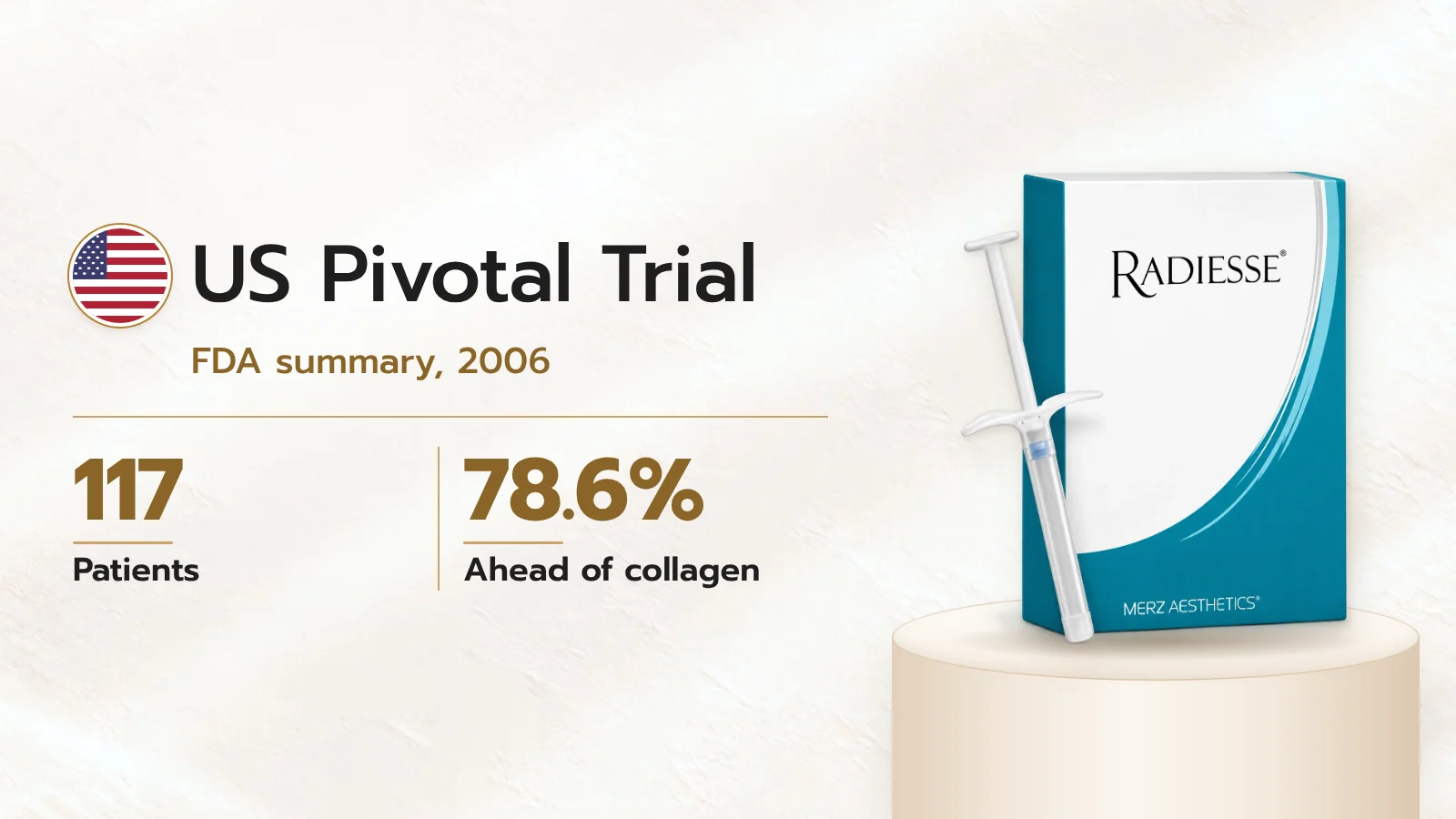
The US pivotal trial, described in the FDA summary of safety and effectiveness (2006), treated 117 patients and had three blinded doctors score smile lines on a six-point wrinkle scale.
Both sides started at an average of 3.4. At 6 months the Radiesse side averaged 2.1, against 3.4 on the collagen side, where a lower score means milder lines.
At 6 months, the Radiesse side was at least one point ahead of the collagen side in 78.6% of patients. That compares the two sides; it is not a before-and-after improvement rate.
A second trial of 60 patients, published in Dermatologic Surgery (2008), compared CaHA with a hyaluronic acid filler. At 12 months, blinded reviewers rated 79% of the Radiesse sides improved, against 43% of the hyaluronic acid sides.
The Radiesse sides also used 30% less product, with treatment given in two sessions 3 months apart.
Both trials looked at smile lines in adults. Their figures describe that area and should not be read as results for the cheeks, jawline or hands.
When Will You See Radiesse Results, and How Long Do They Last?
Radiesse adds visible volume immediately, while the collagen-stimulating result develops over the following months and generally peaks around 3-6 months. Duration is commonly described as 12-18 months, with some results lasting up to two years depending on the treatment area and individual response.
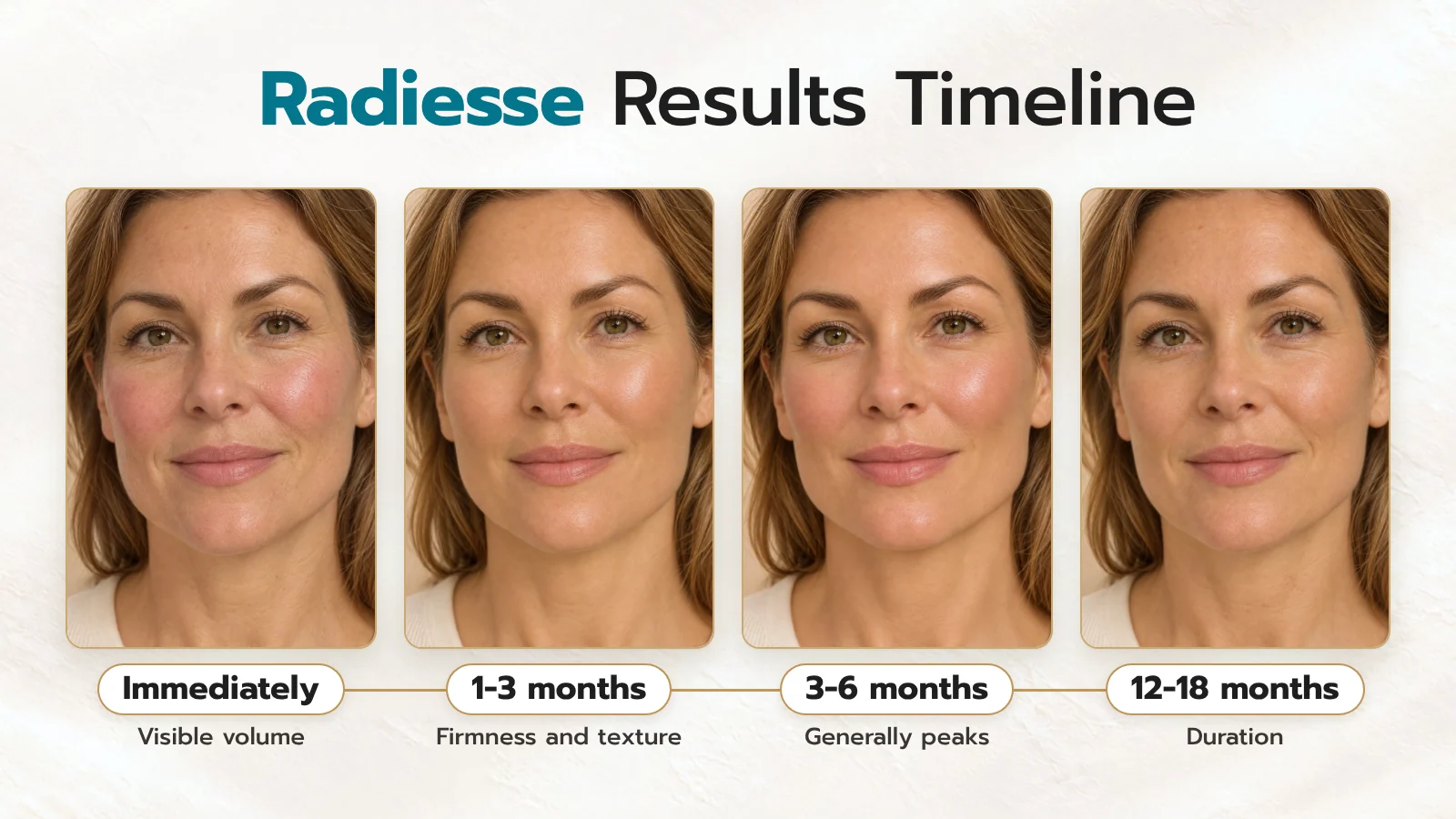
Early collagen activity can begin during the first few weeks, with changes in firmness and texture becoming noticeable over roughly 1-3 months. Initial swelling and bruising often settle over 1-2 weeks, so the first-day appearance includes temporary reactions as well as the gel's filling effect.
What Affects How Long Radiesse Lasts?
The treated area affects longevity, with more mobile areas tending to lose the visible effect sooner than areas used for deeper support. The expected duration also varies with individual metabolism, dilution and technique.
- Cheeks: often around 12-18 months or longer.
- Jawline and chin: commonly around 12-18 months.
- Nasolabial folds: often around 12 months.
- Hands: a year or longer is commonly described.
Smoking and sun exposure may shorten the visible result. Duration should be judged against the original goal: maintained contour after a standard-concentration injection is a different outcome from improved texture after hyperdiluted treatment.
How Many Radiesse Sessions Will You Need?
Most plans at Edition Clinic use one to two sessions spaced 4 to 6 weeks apart. The second session refines the result once the first has settled. The number depends on how much support the area needs and how your skin responds after the first visit.
Because the microspheres are broken down slowly, maintenance sessions are usually planned months apart rather than weeks. Your doctor reviews the area before suggesting a top-up.
What Happens During a Radiesse Appointment?
A Radiesse appointment takes about 50–75 minutes in the chair, including 10–15 minutes of consultation, 20–30 minutes for numbing cream and 20–30 minutes of treatment. The doctor marks the areas and injects small amounts with a fine needle or a cannula, a thin blunt tube, as the area requires. The doctor then shapes the product by hand before you leave.
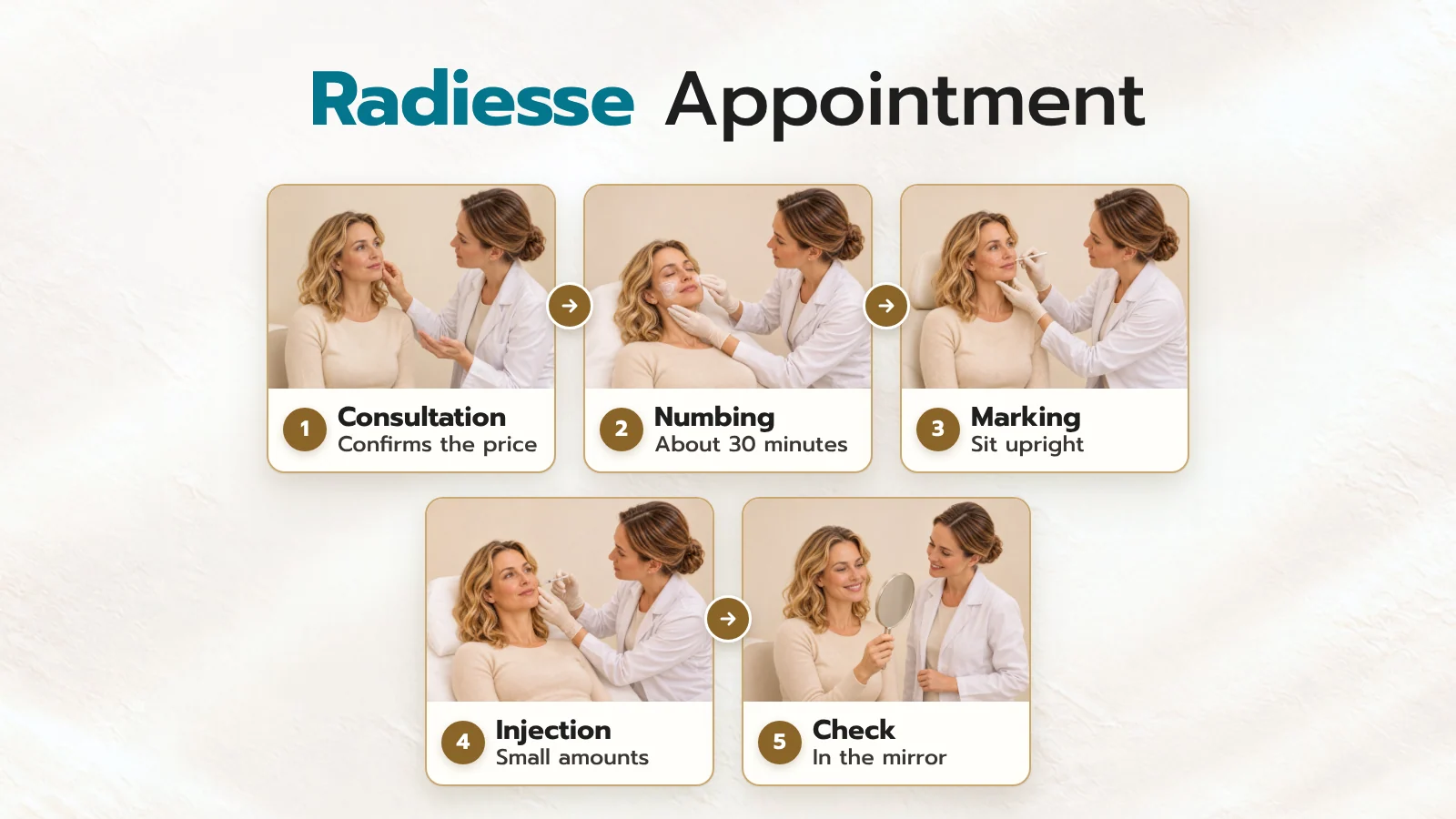
The appointment step by step:
- Consultation: the doctor examines your face, explains the plan and confirms the price.
- Numbing: numbing cream is applied for 20–30 minutes.
- Marking: the treatment points are marked while you sit upright.
- Injection: Radiesse Plus is placed in small amounts, and its lidocaine adds comfort as it goes in.
- Check: the doctor checks the result in the mirror with you before you go.
Does Radiesse Hurt? Pain and Downtime
Radiesse injections usually cause mild to moderate discomfort, with a brief pinprick followed by pressure as the gel is placed. Downtime mainly involves temporary swelling, redness, bruising or tenderness. Many people resume desk work or light routines within 1-2 days, before all visible reactions have settled.
Sensitive areas, such as around the mouth or nasolabial folds, may feel more tender than the cheeks or jawline. A slow injection technique gives tissue time to accommodate the product, while numbing cream and lidocaine can reduce discomfort.
- First 24-48 hours: visible reactions may be most noticeable early on, while tenderness or a dull ache often improves within this period.
- Over the following days: swelling usually begins to reduce within 2-3 days, while bruises may take around 5-10 days to fade.
- Within 1-2 weeks: most visible injection-site reactions settle, so a quick return to work does not always mean the skin already looks fully recovered.
- Early aftercare: avoid strenuous exercise, saunas and other strong heat for 24-48 hours, and avoid pressing or rubbing the area. Massage should follow the injector's specific instructions.
A wrapped cold compress applied in short intervals can help with swelling. Follow the written aftercare for the area treated. Severe or worsening pain, unusual skin colour or vision changes need urgent assessment, as explained in the risk section below.
What Are the Side Effects and Risks of Radiesse?
Radiesse can cause temporary swelling, bruising, redness, pain, tenderness or itching at the injection sites. It also carries risks of persistent nodules and rare but serious vascular complications, which can cause tissue injury or vision loss if material enters a blood vessel.
Common injection-site reactions usually improve over a few days to two weeks. Temporary firmness can occur as the area settles. A persistent, painful or enlarging lump is different from short-lived post-injection swelling and should be assessed.
Less Common and Serious Complications
Vascular occlusion can interrupt blood flow and cause tissue injury, including skin necrosis. Accidental injection into facial blood vessels can also cause vision loss, including blindness, or a stroke. Persistent nodules or granulomas, which are firm lumps or inflammatory reactions, can develop weeks or months later.
- Infection: local skin infection or an abscess may develop at the treated site.
- Delayed-onset inflammation: swelling or redness may develop months later, sometimes after an illness, dental treatment or vaccination.
- Asymmetry or contour irregularities: uneven placement or migration of material can affect the outline of the treated area.
- Hand-specific symptoms: hand treatment can temporarily affect movement or sensation, alongside swelling and discomfort.
- Later facial surgery: scar tissue or tissue integration can complicate procedures such as a facelift.
Severe or increasing pain, pale or dusky skin, or any vision change require urgent medical assessment. These warning signs should not be treated as routine bruising to wait out.
Can Radiesse Be Reversed?
Radiesse cannot be dissolved with hyaluronidase. The enzyme used for hyaluronic acid fillers does not remove the CaHA component, so Radiesse has no equivalent straightforward enzyme reversal.
Persistent lumps or granulomas can therefore be harder to manage than a dissolvable HA filler. Some require specialist medical treatment or surgical management rather than a dissolving injection.
How Does Radiesse Compare With Other Treatments?
Radiesse uses CaHA microspheres in gel to combine immediate filling with collagen stimulation. Hyaluronic acid fillers provide gel-based volume and can be dissolved; Sculptra builds collagen more gradually; Botox relaxes muscles that cause expression lines. These differences affect the concern and area each treatment is used for.
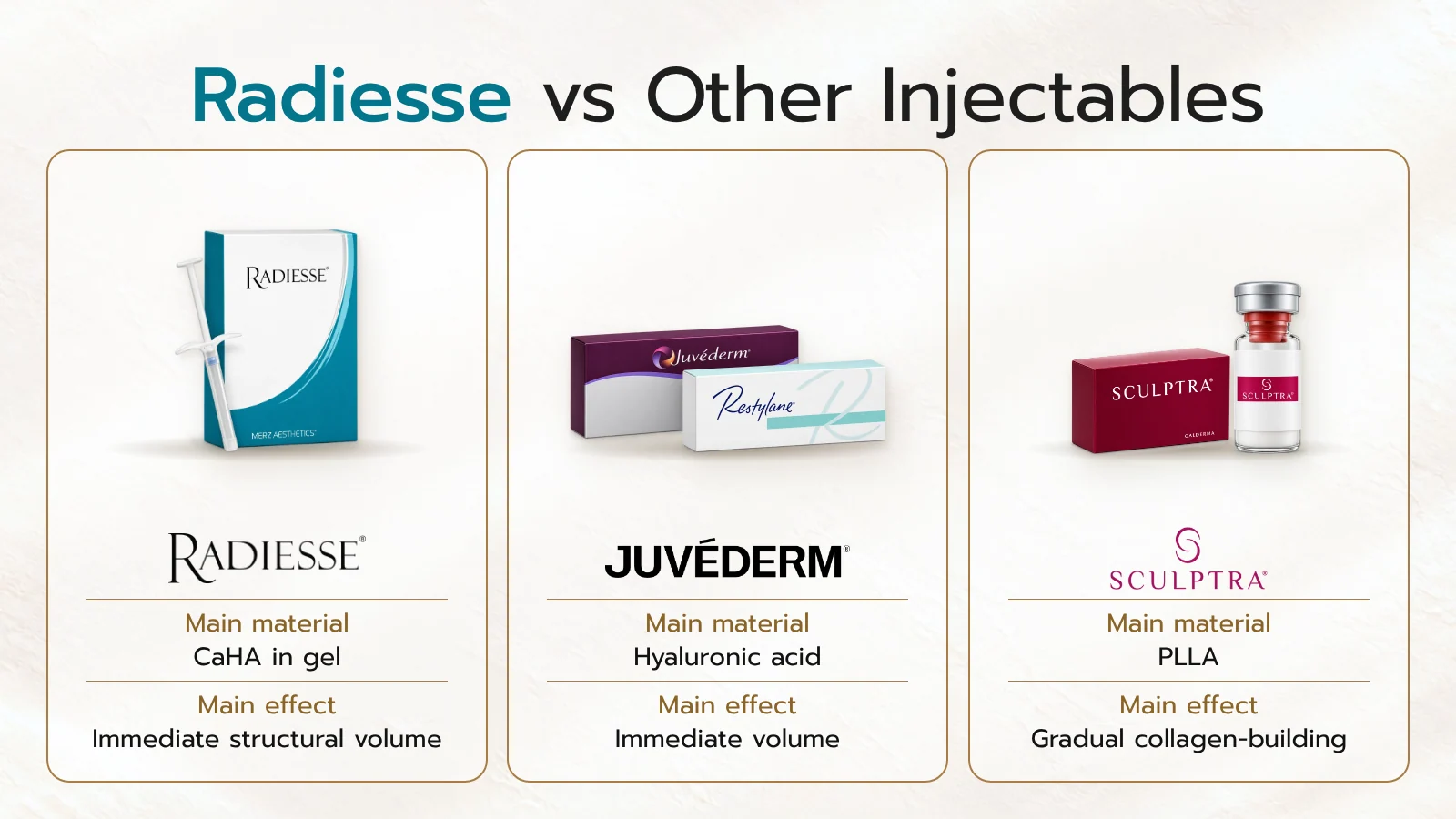
| Injectable | Main material | Main effect |
|---|---|---|
| Radiesse | Calcium hydroxylapatite (CaHA) in gel. | Immediate structural volume with continuing collagen and elastin stimulation. |
| HA fillers, including Juvéderm | Hyaluronic acid. | Immediate volume with water-binding properties; product choice affects softness and the intended area. |
| Sculptra | Poly-L-lactic acid (PLLA). | A gradual collagen-building response, usually through a series of sessions. |
| Botox | Botulinum toxin type A. | Temporary muscle relaxation for movement-related lines. |
| Ellansé | Polycaprolactone (PCL) microspheres. | Immediate support combined with collagen stimulation, using a different material from Radiesse. |
Radiesse vs Hyaluronic Acid Filler
Hyaluronic acid fillers, including Juvéderm and Restylane products, offer softer or more flexible options for areas such as the lips and tear troughs, depending on the formulation. Radiesse is generally firmer and is used for deeper structural support. HA fillers can be dissolved with hyaluronidase; Radiesse cannot.
Juvéderm is a family of HA fillers, so duration varies by the particular product and area. Some HA treatments are described at 6-12 months, while certain longer-lasting formulations can reach 18-24 months.
The filler options in Bangkok page lists the hyaluronic acid brands used at Edition Clinic.
Radiesse vs Sculptra
Sculptra uses PLLA to produce a gradual collagen response, with visible changes developing over weeks and months. It is often discussed for broader facial volume loss, while Radiesse provides immediate contour support in a targeted area as its collagen effect develops.
Treatment courses also differ: Radiesse is commonly described in one or two sessions, compared with two or three for Sculptra. These are typical patterns rather than a fixed course for every face.
The two are compared in more detail in Sculptra vs Radiesse in Bangkok.
Radiesse vs Botox
Botox reduces muscle activity associated with dynamic wrinkles, such as frown lines and crow's feet. Radiesse addresses lost volume, deeper static folds and structural support. Botox commonly lasts around 3-4 months, while Radiesse is generally described at 12-18 months.
Combination treatment can address separate concerns, for example using Radiesse for cheek or jawline support and Botox for upper-face expression lines.
Radiesse vs Skin Boosters
Skin boosters such as Rejuran and Profhilo are injected into the surface layers to improve hydration, texture and glow. They do not lift or reshape the face. Radiesse works deeper on support and contour, so the two are often planned together rather than chosen against each other.
See the Rejuran skin booster page if skin quality is your main concern.
How Much Does Radiesse Cost in Bangkok?
In Bangkok, Radiesse treatment prices can range from approximately 20,000–35,000 THB. At Edition Clinic, Radiesse Plus costs 20,000 THB.
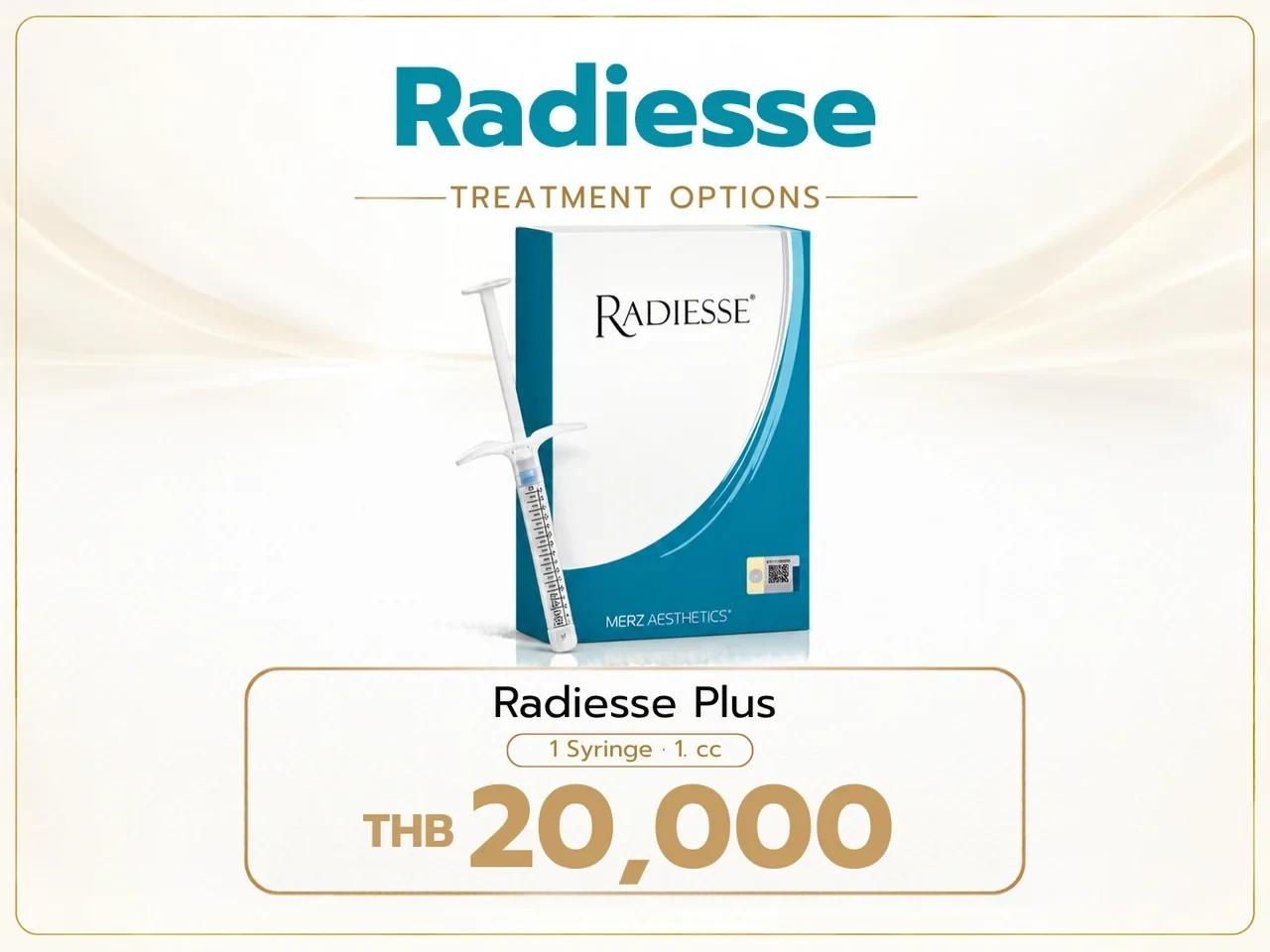
What the price covers:
- Included: one 1.5 cc syringe of genuine Radiesse Plus with lidocaine.
- Included: the consultation, numbing cream and injection by a doctor.
- Depends on you: the number of syringes and sessions your face needs.
The total depends on how many syringes your plan needs. A single area may need one syringe, while a full-face plan can need more, and the doctor confirms the number before you start.
Clinics quote Radiesse per syringe, per area or as part of a package. Check the product, the syringe size and how many syringes are included before comparing prices.
Pricing is per syringe rather than per session, so a second session in a two-session plan is priced the same way.
Why Choose Edition Clinic for Radiesse in Bangkok?
Every Radiesse plan at Edition Clinic is made and injected by a doctor after a face assessment. Genuine Radiesse Plus is used, and the price is shown before you decide. Edition Clinic is the official Bangkok branch of Edition Plastic Surgery, Seoul, and the doctor says plainly when another treatment would suit you more.

Consultation in English or Korean
Consultations are held directly with the doctor in English. You can ask about the product, the areas, the number of syringes and the price in your own words.
If you would prefer to talk in Korean, mention it when you book. The consultation is free, and there is no obligation to book treatment afterwards.
Getting Here and Booking
Edition Clinic is on the 4th floor of Marche 150 Thong Lo, open daily from 11:00 to 20:00, and you can book by LINE or WhatsApp.
 Address
- Room A408, 4th Floor, Marche 150 Thong Lo, Khlong Tan Nuea, Watthana, Bangkok 10110
 Nearest BTS
- BTS Thong Lo
 Opening hours
- Every day, 11:00–20:00
 Phone
- +66 92-255-8952
 How to book
- LINE @editionclinic or WhatsApp — free consultation
 Google Rating
Clinic-wide patient count: 6,717 unique patients treated from 7 August 2023 to 1 October 2026, excluding repeat visits. This is not a treatment-specific count.
Radiesse in Bangkok: Summary
- What it is: Radiesse is a calcium hydroxylapatite filler that lifts on the day and then stimulates collagen.
- Evidence: Radiesse smile-line sides were rated improved in 79% of patients at 12 months in a blinded trial.
- Where it suits: Radiesse suits deeper support in the cheeks, jawline and smile lines, not the lips or under-eyes.
- Reversibility: Radiesse cannot be dissolved, so people who want a reversible filler should choose hyaluronic acid.
- Price: Radiesse Plus at Edition Clinic costs 20,000 THB per 1.5 cc syringe, after a free consultation.
Frequently Asked Questions About Radiesse
1. Is Radiesse painful?
Answer: Most people describe it as pressure with brief stinging rather than pain. Numbing cream is applied first, and Radiesse Plus contains lidocaine that numbs the area as the product goes in. The discomfort usually fades within the first few injection points.
Tell the doctor if you are sensitive to pain, and the pace of the treatment can be adjusted.
2. Will Radiesse look natural?
Answer: It can, when the amount is matched to the face and placed at the right depth. Because Radiesse is firmer than most gel fillers, the doctor uses conservative amounts and builds gradually. Part of the final look comes from your own collagen, which develops slowly over the following months.
Bring photos of looks you like and dislike; they make the conversation concrete.
3. Can Radiesse be combined with other treatments?
Answer: Yes, when there is a clear reason, doctors often combine it with Botox for movement lines, skin boosters for texture, or lifting treatments for loose skin. The doctor plans the order and spacing of each treatment, since doing everything on one day is not always the most comfortable or effective.
Tell the doctor about every treatment you have had in the past year.
4. Is it safe to have Radiesse if I already have hyaluronic acid filler?
Answer: Often yes, but the doctor first checks where the existing filler sits and how much remains. Radiesse usually goes into a different area or layer. If old filler is causing a problem, it may be dissolved and allowed to settle before Radiesse is added.
Bring the name of the product and the date of your last filler if you know them.
5. Why is Radiesse not used under the eyes or in the lips?
Answer: Edition Clinic does not use Radiesse under the eyes or in the lips. Under-eye skin is thin and the lips move constantly, so a firm product that cannot be dissolved risks visible lumps there. The doctor suggests a hyaluronic acid filler or skin booster instead.
The doctor will also explain which option fits your under-eye or lip concern.
References
- US Food and Drug Administration. Summary of Safety and Effectiveness Data: Radiesse (P050052). 2006. FDA P050052
- Moers-Carpi MM, Tufet JO. Calcium hydroxylapatite versus nonanimal stabilized hyaluronic acid for the correction of nasolabial folds: a 12-month, multicenter, prospective, randomized, controlled, split-face trial. Dermatol Surg. 2008;34(2):210–215. PMID 18093199
- Bass LS, et al. Calcium hydroxylapatite (Radiesse) for treatment of nasolabial folds: long-term safety and efficacy results. Aesthet Surg J. 2010;30(2):235–238. PMID 20442101
- Alam M, Yoo SS. Technique for calcium hydroxylapatite injection for correction of nasolabial fold depressions. J Am Acad Dermatol. 2007;56(2):285–289. PMID 17224371
- Stefura T, et al. Tissue Fillers for the Nasolabial Fold Area: A Systematic Review and Meta-Analysis of Randomized Clinical Trials. Aesthetic Plast Surg. 2021;45(5):2300–2316. PMID 34255156
Wondering Whether Radiesse Suits Your Face?
Book a free 1:1 consultation for Radiesse at Edition Clinic Bangkok.
